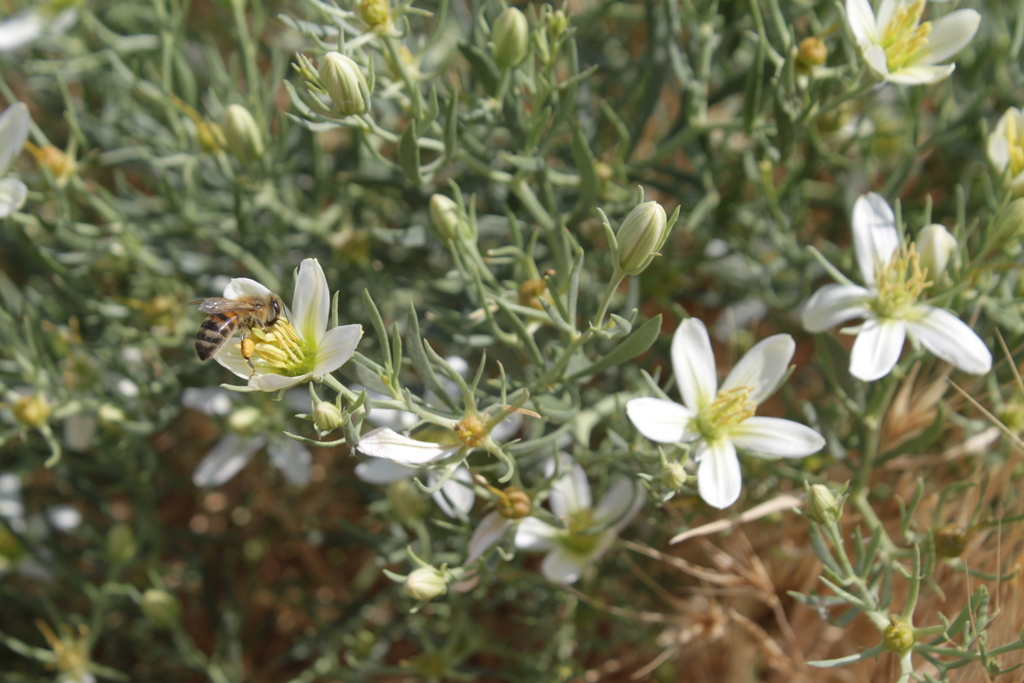
Peganum harmala
- Origin
- Asia
- Part used
- Seeds / fruit, Root, Stem
- Tradition
- Traditional ethnobotany
Peganum harmala, also called Syrian rue or harmel, has grown on the arid lands of Central Asia and the Mediterranean basin since time immemorial. Caravan travelers and ancient healers attributed purifying virtues to it, both for the body and the home, burning its seeds as fumigation during protective rites. A plant with a powerful reputation, it holds a place apart in the traditional herbalist notebooks of the East.
Traditional uses
Traditional protective fumigation
The dried seeds were burned as fumigation in homes and passageways, a practice widespread in Central Asia and the Middle East to purify the ambient air.
An ancient digestive use
The root and seeds were sometimes used in very small amounts in certain folk traditions to support digestion, although this use remained marginal compared to fumigation.
Traditional eye care
In certain Asian folk pharmacopeia, a diluted preparation made from the seeds or stem was reportedly used as an external application around the eyes, a use now abandoned due to the risks associated with the plant.
An ancestral textile dye
Harmel seeds were also used, outside of bodily uses, to obtain a red dye used in dyeing carpets and textiles in Central Asia.
What to know before use
A plant containing powerful alkaloids (harmaline, harmine) that can cause neurological effects and serious drug interactions, particularly with antidepressants and other substances acting on the nervous system. Internal use strongly discouraged without the supervision of a qualified health professional. Contraindicated during pregnancy and breastfeeding, as well as in children. Fumigation in an enclosed space should remain occasional and well ventilated; never ingest the raw seeds.
The detailed notebook
- Prepared as a paste or decoction
- Traditional duration of use
- Known contraindications
- Related species and their uses
Where to find it
Partner herbalists — available with the detailed notebook.
Sources
Wikipedia