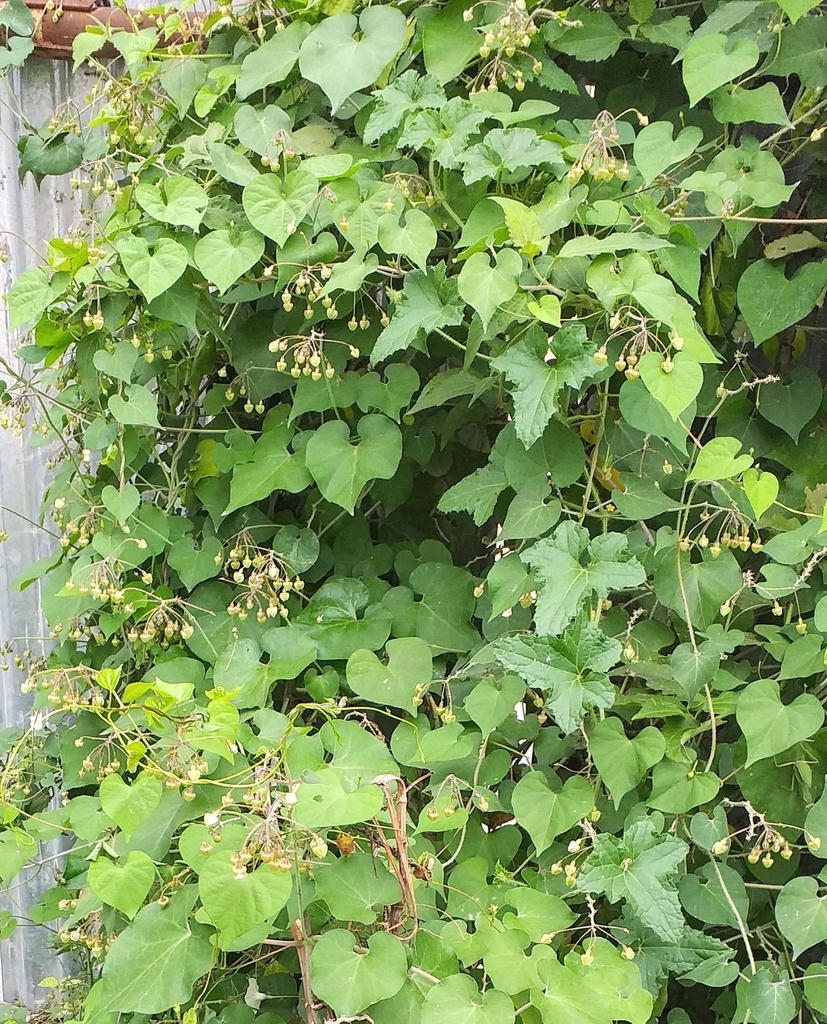
Pergularia daemia
- Origin
- Asia
- Part used
- See detailed notebook
- Tradition
- Traditional ethnobotany
Pergularia daemia is a strong-smelling climbing vine belonging to the Apocynaceae family, widespread in the warm regions of Asia and Africa where it often grows wild, along hedges and waste ground. In Indian and Ayurvedic folk traditions, it is sometimes known as the "stinking vine" because of its characteristic scent, and it has long held a place in local family pharmacopeia. This entry gathers the traditional uses attributed to it, for historical and informational purposes.
Traditional uses
Traditional digestive trouble and deworming remedy
The leaves and roots were traditionally used as a decoction to relieve digestive troubles and as a dewormer in certain South Asian folk pharmacopeia.
Support for cough and fever
A leaf decoction was sometimes used in folk tradition to help with episodes of cough, fever, or colds.
A traditional use linked to menstruation
In certain traditions, the plant was associated with an emmenagogue use, thought to promote menstruation; this use calls for great caution and is not recommended without specialist advice.
Local application on irritated skin
The crushed leaves were sometimes applied locally as a poultice to soothe certain minor skin conditions, according to folk uses observed in India.
What to know before use
A plant with a traditional use scientifically poorly documented: never use it without the advice of a qualified health professional. Contraindicated in pregnant or breastfeeding women due to its supposed traditional emmenagogue use, which poses a risk to pregnancy. Avoid any prolonged or high-dose use, as digestive or other adverse effects may occur; no safe dose is clearly established. Do not give to children without medical supervision, as the plant is not sufficiently studied for this use.
The detailed notebook
- Prepared as a paste or decoction
- Traditional duration of use
- Known contraindications
- Related species and their uses
Where to find it
Partner herbalists — available with the detailed notebook.
Sources
PFAF