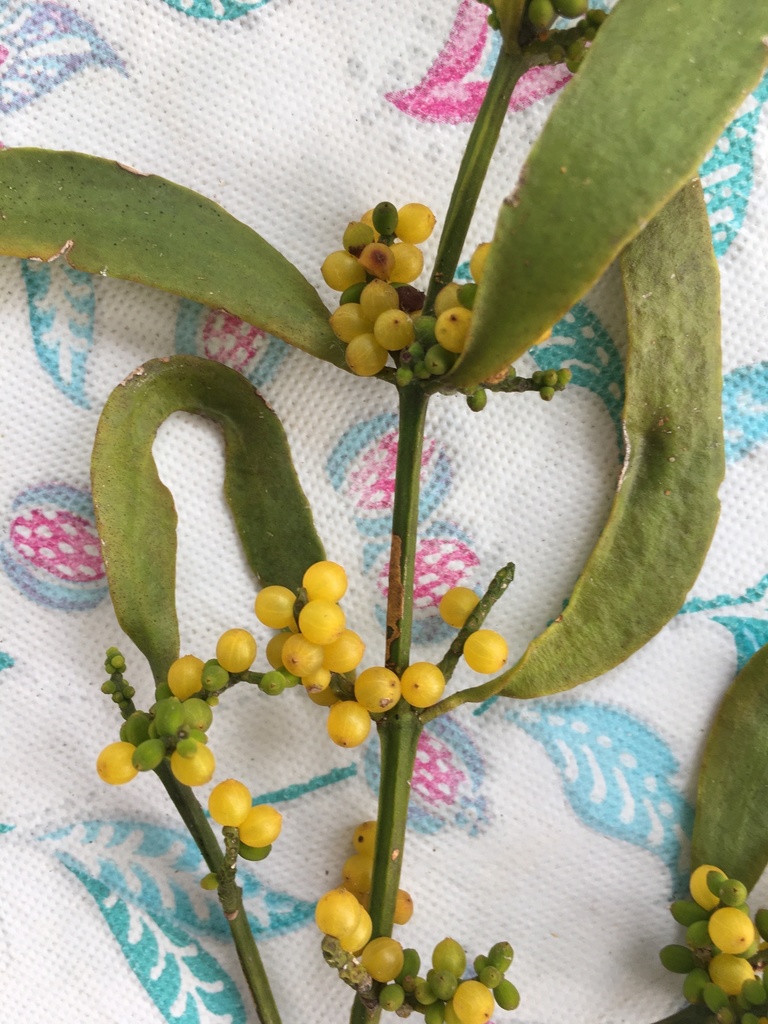
Phoradendron quadrangulare
- Origin
- South America
- Part used
- Leaves
- Tradition
- Traditional ethnobotany
A cousin of the great mistletoes that parasitize the canopies of South America, Phoradendron quadrangulare grows discreetly, clinging to the branches of host trees from which it draws part of its sap. Traditional healers of these regions have long given it a place among remedies meant to support the body against common ailments. Its use nonetheless remains marginal and poorly documented by modern science, which calls for a cautious reading of its history.
Traditional uses
What to know before use
Phoradendron plants are hemiparasites, several species of which contain potentially toxic compounds; internal use should remain exceptional and supervised. Formally not recommended for pregnant or breastfeeding women, as well as young children, in the absence of sufficient safety data. Do not combine with medication treatment without the advice of a health professional, as interactions are not excluded. Avoid any prolonged self-medication; consult a qualified practitioner before any use, internal or external.
The detailed notebook
- Prepared as a paste or decoction
- Traditional duration of use
- Known contraindications
- Related species and their uses
Where to find it
Partner herbalists — available with the detailed notebook.
Sources
PFAF, Wikipedia