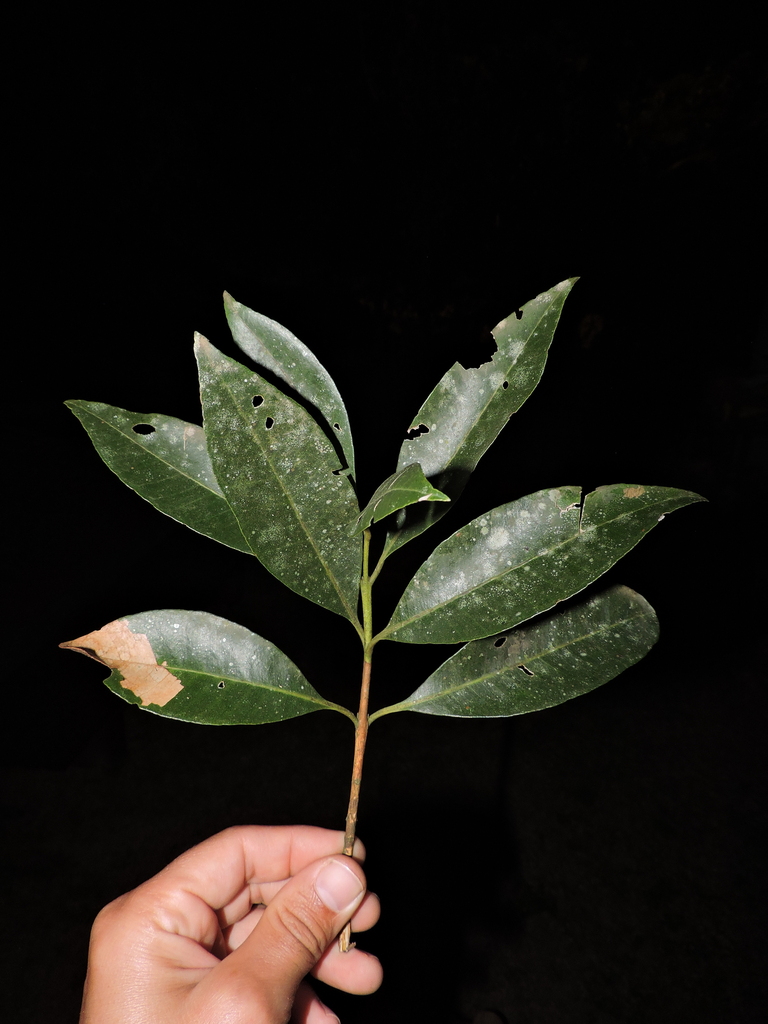
Pimenta pseudocaryophyllus
- Origin
- South America
- Part used
- Leaves
- Tradition
- Traditional ethnobotany
In the forests of South America, Pimenta pseudocaryophyllus has long been known by the popular name “cravo-do-mato” or “pimenta-do-mato,” its leaves releasing a clove-like scent when crushed. Traditional herbalists of Latin America used it in household teas, passed down through generations of rural folk knowledge.
Traditional uses
Digestive support
The leaf was traditionally infused to accompany difficult digestion and ease heaviness after meals, continuing the folk uses attributed to aromatic plants of the Myrtaceae family.
Calm and relaxation
Some South American folk traditions report a use of the leaf as an infusion to promote relaxation and calm passing agitation, in the manner of other regional aromatic plants.
Comfort for the respiratory tract
Vapors and leaf infusions were sometimes used traditionally to clear the airways during seasonal colds.
A popular clove substitute
Owing to its high content of aromatic compounds close to eugenol, the dried leaf has long served as a spice and household scent, a use that accompanied its place in folk herbal medicine.
What to know before use
Its richness in powerful aromatic compounds (close to eugenol) calls for moderate, occasional use, as prolonged or concentrated use is not recommended without professional advice. As this plant is scientifically under-studied, its use is discouraged for pregnant or breastfeeding women, as well as for young children. Interactions with certain medications cannot be ruled out; the advice of a health professional is recommended before any regular use. Avoid any use of essential oil or concentrated extract without supervision, owing to the risk of mucous membrane irritation and toxicity at high doses.
The detailed notebook
- Prepared as a paste or decoction
- Traditional duration of use
- Known contraindications
- Related species and their uses
Where to find it
Partner herbalists — available with the detailed notebook.
Sources
PFAF, PubMed, Wikipedia