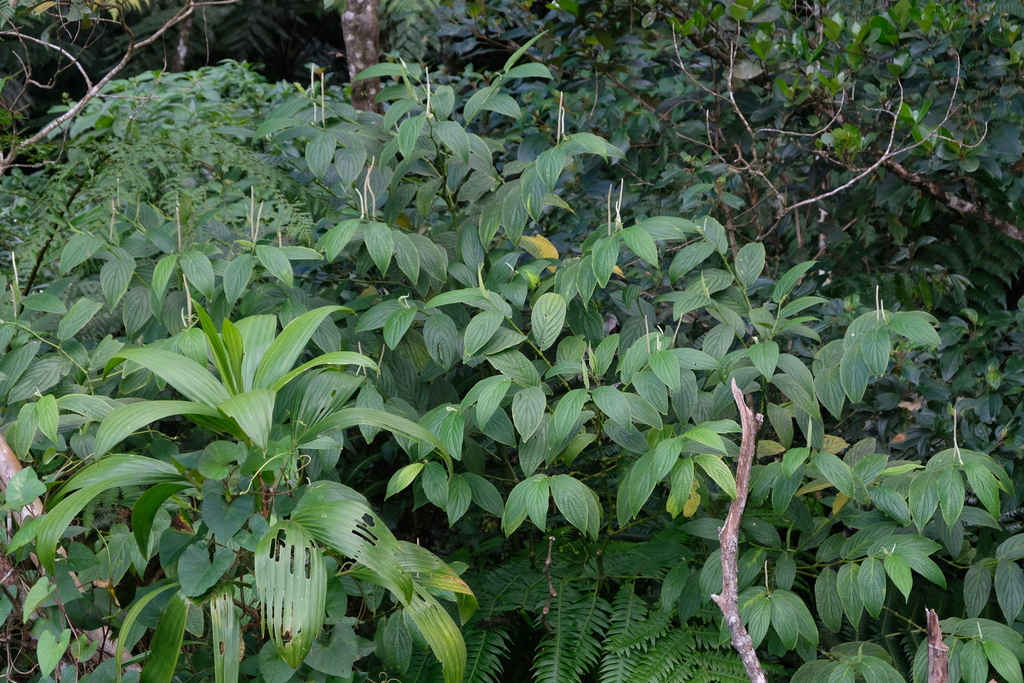
Piper aduncum
- Origin
- South America
- Part used
- Leaves
- Tradition
- Traditional ethnobotany
In the tropical forests of South America, Piper aduncum, a wild cousin of the pepper plant, has long been known to Amazonian healers. Its crushed leaves, with a peppery, slightly anise-like scent, have for generations served to treat everyday ailments and heal wounds encountered in the forest.
Traditional uses
Traditional wound care
Crushed leaves or poultices were applied to cuts, wounds, and insect bites to soothe and promote healing, according to the practices of Amazonian healers.
Digestive comfort
A leaf infusion was traditionally drunk to relieve stomach aches, bloating, and mild digestive troubles.
Mild respiratory ailments
Leaf vapors or decoctions were used in Amazonia to clear the airways in cases of cold or cough.
A traditional antiseptic use
The plant was reputed for its cleansing properties, used in washes to clean the skin or disinfect minor lesions.
What to know before use
Do not use without the advice of a health professional, particularly for prolonged internal use. Avoid entirely in pregnant or breastfeeding women, for lack of safety data. Reserved for adult use; not recommended for children. For skin application, test on a small area beforehand to rule out any allergic reaction.
The detailed notebook
- Prepared as a paste or decoction
- Traditional duration of use
- Known contraindications
- Related species and their uses
Where to find it
Partner herbalists — available with the detailed notebook.
Sources
PFAF, PubMed, Wikipedia