Piper excelsum
- Origin
- Oceania
- Part used
- See detailed notebook
- Tradition
- Traditional ethnobotany
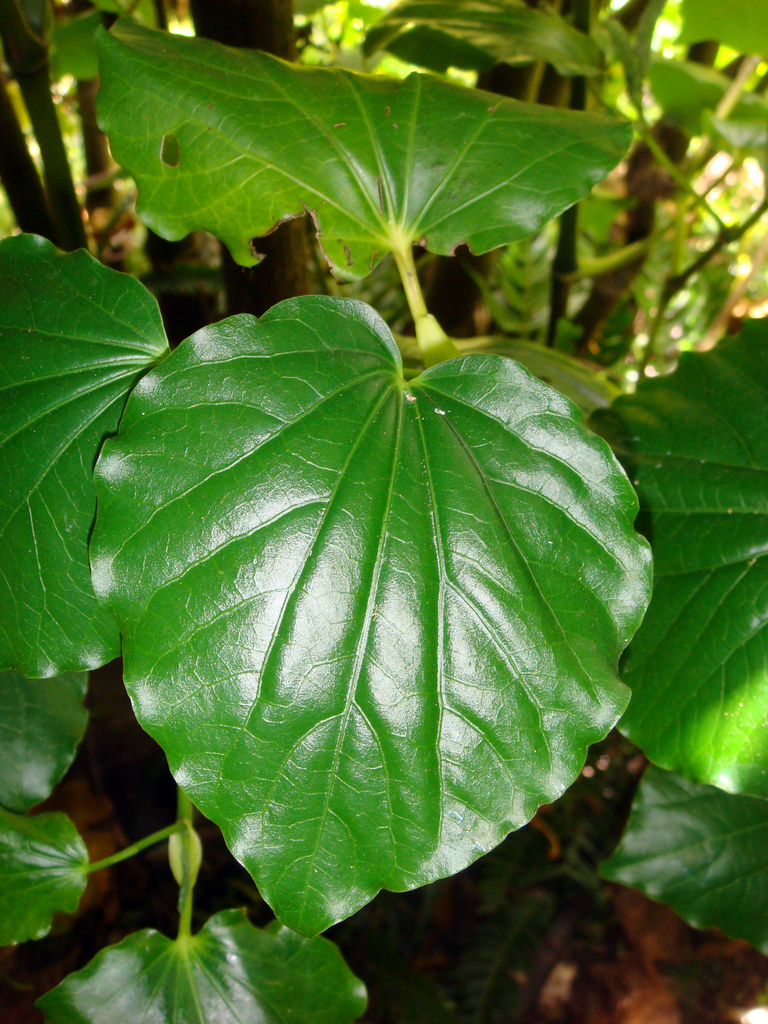
Kawakawa, the Pacific cousin of the pepper plant, holds a place of choice in the traditional Māori pharmacopoeia of New Zealand. Its heart-shaped leaves, often riddled with small holes from the insects that feed on them, are seen by tohunga (traditional healers) as a sign of good quality. For generations, this plant has accompanied the everyday and ceremonial uses of the peoples of the Pacific.
Traditional uses
Before you use it
The genus Piper contains active compounds (kavalactones and related alkaloids) that may be toxic with prolonged or high-dose use; the advice of a healthcare professional is recommended before any internal use. Use is discouraged during pregnancy and breastfeeding, as a precaution, in the absence of sufficient data. Do not give to young children without professional advice. Avoid combining with sedative or liver-toxic medication, as a precaution, due to a lack of data on interactions.
The detailed notebook
- Prepared as a paste or decoction
- Traditional duration of use
- Known contraindications
- Related species and their uses
Where to find it
Partner herbalists — available with the detailed notebook.
Sources
PFAF, Wikipedia