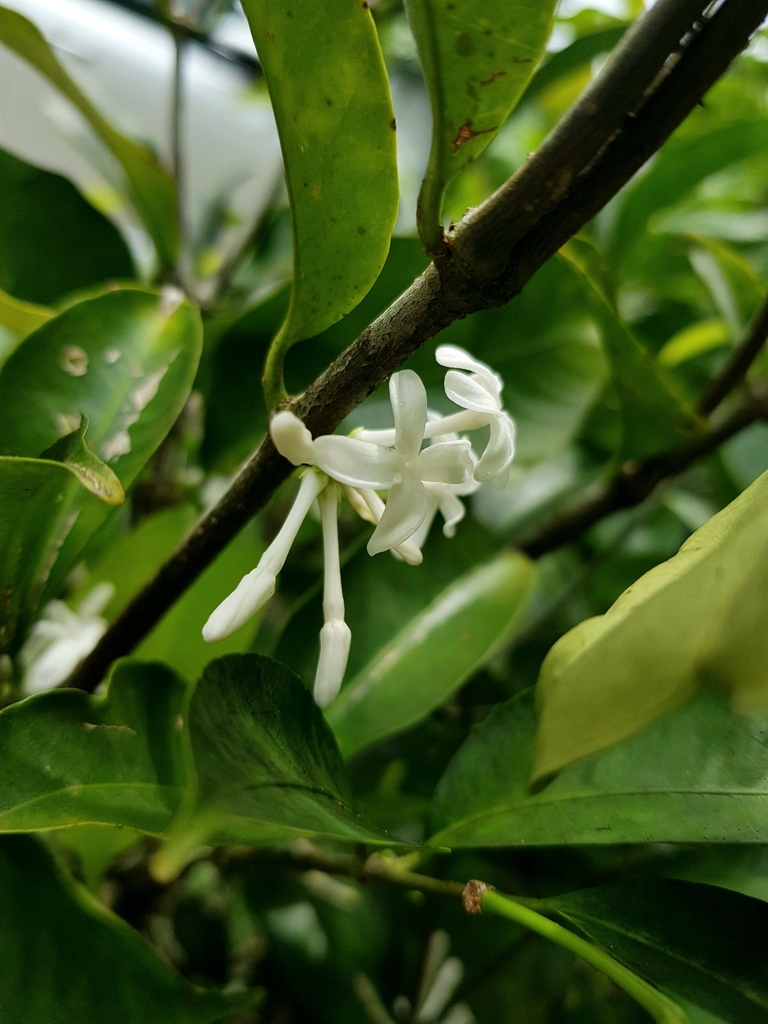
Pleiocarpa mutica
- Origin
- Africa
- Part used
- See detailed notebook
- Tradition
- Traditional ethnobotany
Pleiocarpa mutica is a shrub of the humid forests of Central and West Africa, belonging to the Apocynaceae family, known for its powerful alkaloids. In the traditional pharmacopoeias of Nigeria, Cameroon, and Congo, the bark of this plant holds a particular place among remedies used against fevers and conditions perceived as infectious. Its use, passed down through generations of traditional healers, remains treated with cautious respect, the plant being considered powerful.
Traditional uses
Fevers and infectious conditions
Stem bark was traditionally prepared as a decoction to accompany feverish episodes, particularly in contexts assimilated to malaria by local healers.
Digestive troubles and abdominal pain
Some West African pharmacopoeias report the use of the bark as a decoction to soothe digestive pain and disorders.
Various pains
The plant is among the traditional remedies used against various bodily pains, in the form of bark- or root-based preparations.
Postpartum support
In certain traditions, preparations based on this plant were used to support women after childbirth, a reported but scientifically poorly documented use.
Before you use it
A plant rich in indole alkaloids whose powerful physiological effects are documented; any use must be under the supervision of a qualified professional. Contraindicated in pregnant or breastfeeding women due to a lack of safety data and traditional uses suggesting an action on the uterus. Not suitable for self-medication in children, as the margin between traditional use and toxicity is not clearly established. Risk of interactions with cardiovascular or central nervous system medications, due to the alkaloidal nature of its compounds.
The detailed notebook
- Prepared as a paste or decoction
- Traditional duration of use
- Known contraindications
- Related species and their uses
Where to find it
Partner herbalists — available with the detailed notebook.
Sources
PFAF, PubMed