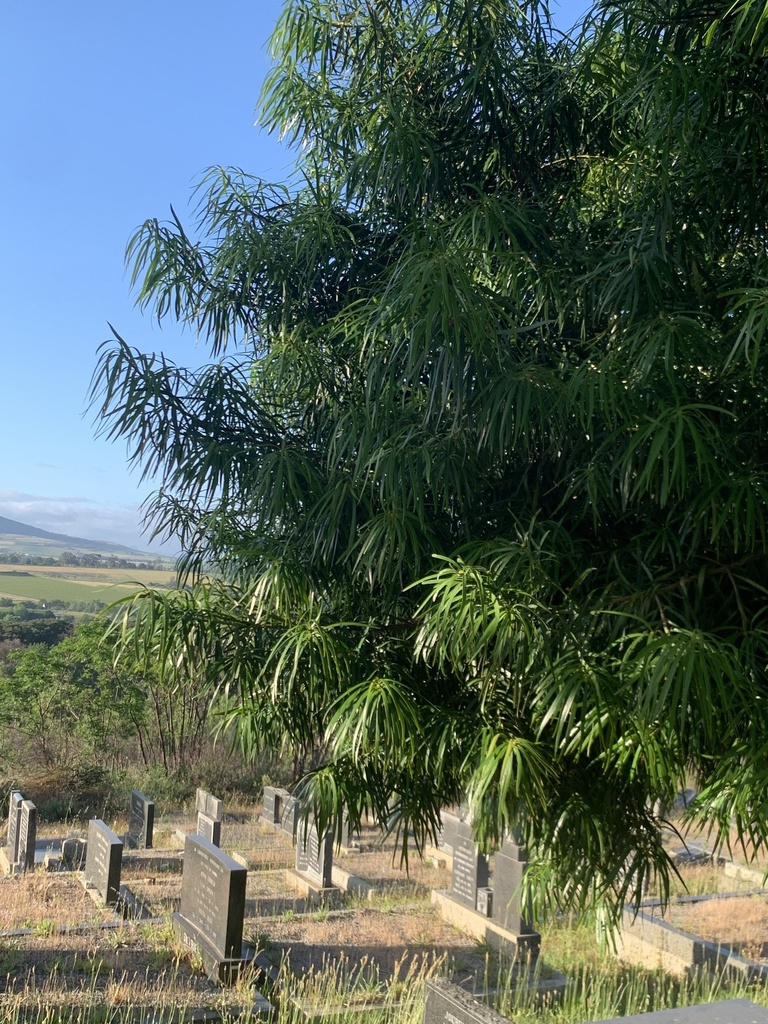
Podocarpus henkelii
- Origin
- Africa
- Part used
- See detailed notebook
- Tradition
- Traditional ethnobotany
Podocarpus henkelii, a majestic conifer of the highland forests of southern Africa, has long been revered by the peoples of South Africa and Swaziland as a sacred tree, often planted near dwellings or chiefs' graves. Its bark and needles have found a modest place in local traditional pharmacopoeias, particularly to ease certain pains. Modern scientific documentation on it, however, remains limited, calling for a cautious reading of its old uses.
Traditional uses
Bark decoction against pain
The bark was traditionally prepared as a decoction to relieve various bodily pains, according to uses reported by certain communities of southern Africa.
Easing joint aches
Some folk practices mention the use of bark-based preparations to ease joint discomfort, in a logic of empirical care passed down orally.
Sacred, protective tree
Beyond its supposed virtues, Podocarpus henkelii was planted near dwellings and graves for its symbolism of protection and longevity.
Before you use it
The traditional uses of this plant remain poorly documented scientifically; caution is warranted and professional advice is recommended before any use. Avoid prolonged or high-dose internal use in the absence of reliable safety data. Do not use in pregnant or breastfeeding women, nor in children, as a precaution. Do not confuse with other conifer species that may have different toxicity.
The detailed notebook
- Prepared as a paste or decoction
- Traditional duration of use
- Known contraindications
- Related species and their uses
Where to find it
Partner herbalists — available with the detailed notebook.
Sources
PFAF, PubMed