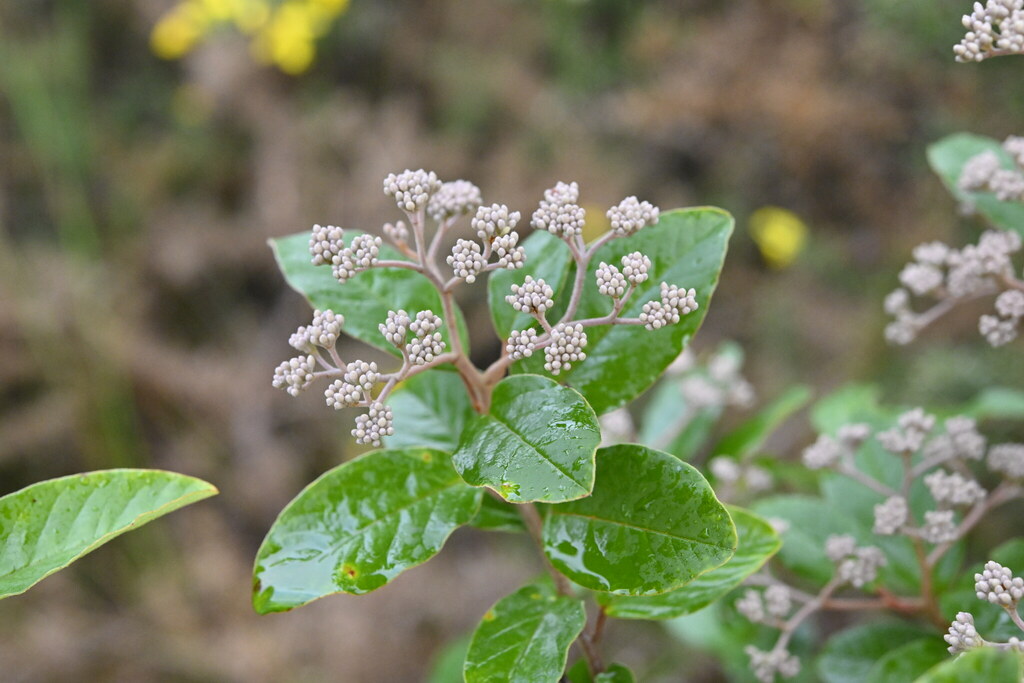
Pomaderris kumeraho
- Origin
- Oceania
- Part used
- See detailed notebook
- Tradition
- Traditional ethnobotany
Kumarahou, a shrub with golden flowers, has long been known to the Māori of New Zealand as the "soap plant," valued both for its ritual uses and its respiratory virtues. Its yellow clusters traditionally announced the renewal of spring and the right time for gathering.
Traditional uses
Traditional respiratory support
The leaves were infused or decocted by the Māori to accompany respiratory conditions such as coughs, bronchitis, and asthma.
Cleansing and purifying use
Flowers crushed in water produced a natural foam traditionally used as a gentle soap for the body and hair.
Traditional digestive tonic
As a light decoction, the plant was sometimes used as a general remedy to support digestion and cleanse the body.
Support for women's troubles
Some Māori traditions report a use of Kumarahou to accompany menstrual troubles, though this use is poorly documented in written sources.
Before you use it
A scientifically little-studied plant: only reported traditional use, not to be substituted for medical advice. Not recommended without the advice of a healthcare professional in pregnant or breastfeeding women, due to a poorly documented traditional use linked to the female sphere. Avoid prolonged self-medication for chronic or severe respiratory conditions; consult a doctor. Do not use in young children without specialist advice.
The detailed notebook
- Prepared as a paste or decoction
- Traditional duration of use
- Known contraindications
- Related species and their uses
Where to find it
Partner herbalists — available with the detailed notebook.
Sources
PFAF, Wikipedia