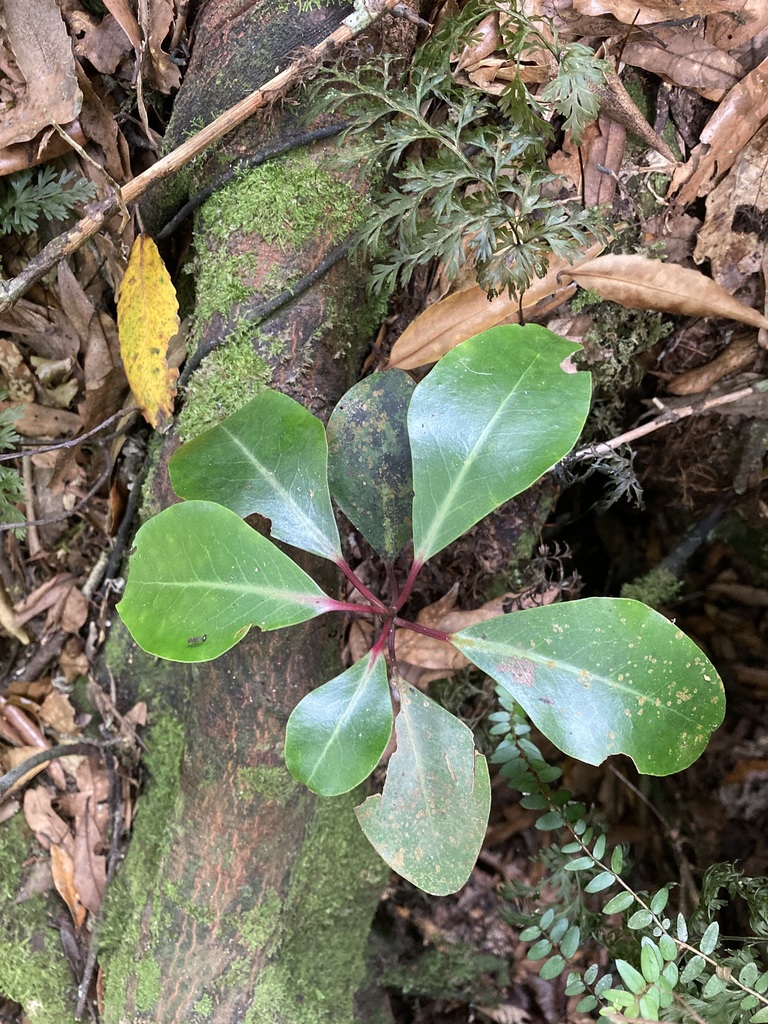
Pseudowintera axillaris
- Origin
- Oceania
- Part used
- See detailed notebook
- Tradition
- Traditional ethnobotany
Beneath the damp canopy of Aotearoa, Pseudowintera axillaris, the lesser-known cousin of Pseudowintera colorata, was known to the Māori as an undergrowth plant with peppery bark and leaves. Its traditional use, more discreet than that of its close relative, belongs to the Oceanian plant pharmacopoeias passed down through generations.
Traditional uses
Application on minor skin lesions
Crushed leaves or preparations from them were traditionally applied to the skin to soothe irritation and minor wounds, according to uses reported among New Zealand's indigenous peoples.
Traditional use for digestive troubles
A light leaf decoction is said to have been used occasionally to relieve minor digestive discomfort, in Oceanian oral tradition.
Traditional relief of localized pain
The plant, known for its characteristic peppery taste typical of the Winteraceae, was sometimes used externally for its traditionally reported soothing properties.
Traditional use against minor infections
Like other Pseudowintera, this species was sometimes used empirically for its cleansing virtues on superficial skin conditions.
Before you use it
Traditional use is poorly documented scientifically: caution is warranted and the advice of a healthcare professional is recommended before any use. The pungent active compound (polygodial) found in Pseudowintera can irritate mucous membranes and sensitive skin when used in concentrated form. Not recommended for pregnant or breastfeeding women, nor for young children, for lack of sufficient safety data. Do not use internally over a prolonged period without guidance, due to a lack of studies on long-term toxicity.
The detailed notebook
- Prepared as a paste or decoction
- Traditional duration of use
- Known contraindications
- Related species and their uses
Where to find it
Partner herbalists — available with the detailed notebook.
Sources
PFAF, Wikipedia