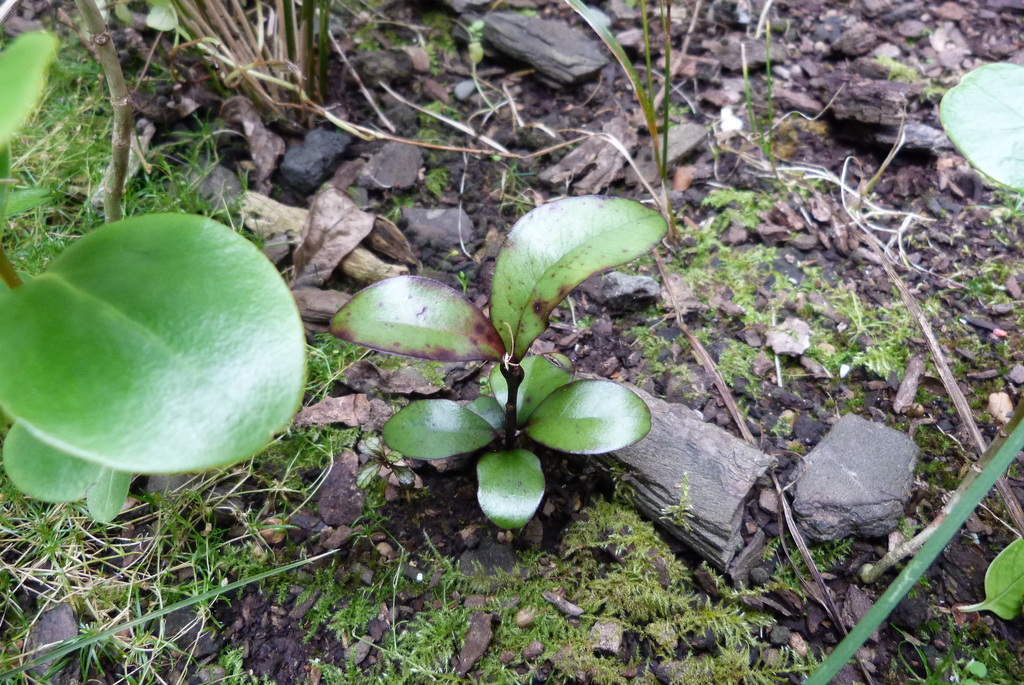
Pseudowintera colorata
- Origin
- Oceania
- Part used
- Leaves
- Tradition
- Traditional ethnobotany
Pseudowintera colorata, called "horopito" by the Maori of New Zealand, is a shrub with leaves mottled red and green, unmistakable amid the damp understorey of Aotearoa. Its pungent, acrid flavor, almost burning on the tongue, long earned it a place in traditional Maori pharmacopoeia, particularly for skin care.
Traditional uses
Traditional care for skin conditions
The crushed leaves, or prepared, were traditionally applied to the skin to soothe irritation and itching, particularly that attributed to fungal or parasitic skin conditions.
Traditional use against digestive troubles
A light leaf infusion was sometimes taken by Maori healers to accompany stomach aches and minor digestive troubles.
Application for localized pain
The chewed leaf, or as a poultice, is said to have been traditionally used to relieve certain pains, owing to the warming sensation it produces on contact with the skin or mucous membranes.
Tonic plant in Maori tradition
Horopito holds a notable place in rongoā, traditional Maori medicine, where it is regarded as a plant with tonic and purifying action.
What to know before use
The sap and fresh leaves are very acrid and can cause an intense burning sensation on the skin and mucous membranes; avoid prolonged contact, especially with the eyes. Internal use is not reliably documented at a precise dose: seek the advice of a healthcare professional or an experienced herbalist before any intake. Not recommended for pregnant or breastfeeding women, nor for young children, due to insufficient safety data. Do not use on broken skin or over a prolonged period without advice, due to the risk of local irritation.
The detailed notebook
- Prepared as a paste or decoction
- Traditional duration of use
- Known contraindications
- Related species and their uses
Where to find it
Partner herbalists — available with the detailed notebook.
Sources
PFAF, Wikipedia