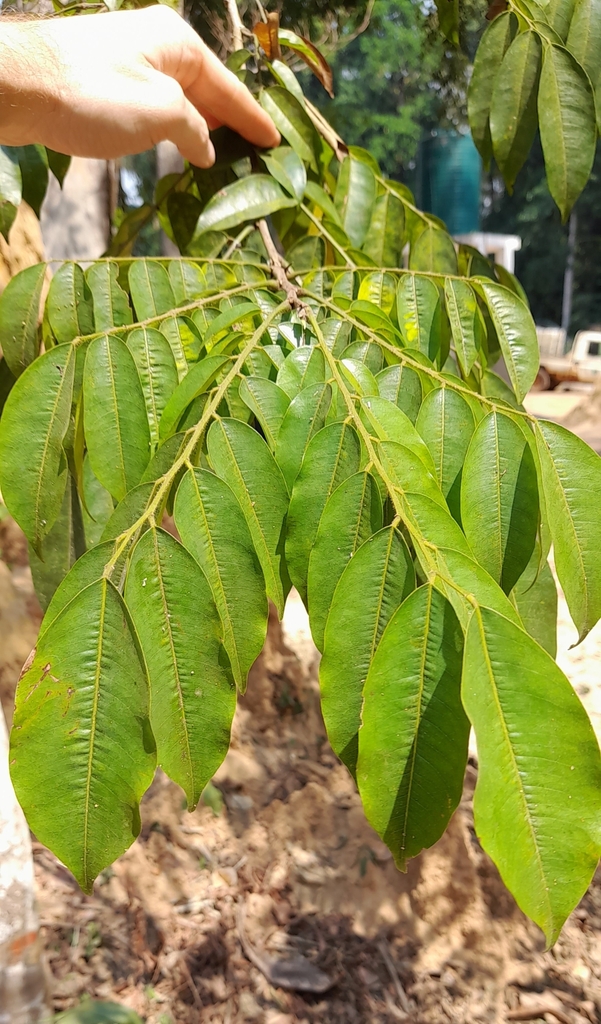
Padouk
- Origin
- Africa
- Part used
- See detailed notebook
- Tradition
- Traditional ethnobotany
In the dense forests of Central Africa, the Padouk, a tree with blood-red wood, holds a particular place in the traditions of forest peoples. Its bark and wood powder, mixed with water or oil, served both for body care and for rites of belonging, marking the skin with its distinctive pigment. This forest giant, long sought after for its precious wood, also carries a memory of more discreet uses, passed down orally from generation to generation.
Traditional uses
Pigmentation and skin care
The red powder drawn from the wood or bark was traditionally mixed with oils to dye and care for the skin, particularly during rites of passage or to mark certain ceremonies.
Applications for joint pain
Bark decoctions were applied externally, as rubs or compresses, to relieve certain pains reported by traditional healers of the equatorial forest.
Care for superficial wounds
The red resin seeping from the cut trunk was used locally as protection on minor wounds or skin irritation, according to uses reported in Central Africa.
Symbolic and protective use
Beyond care, the red pigment of the Padouk carried a strong symbolic dimension, associated with protection and ceremonial uses in several forest societies.
Before you use it
Only external traditional use is documented; no reliable data supports recommending internal use without the advice of a healthcare professional. The possible confusion with other Pterocarpus species and the lack of complete toxicological studies call for great caution. Avoid any prolonged contact on broken skin or mucous membranes without the advice of an experienced traditional healer or healthcare professional. Not recommended for pregnant or breastfeeding women, nor for young children, for lack of sufficient safety data.
The detailed notebook
- Prepared as a paste or decoction
- Traditional duration of use
- Known contraindications
- Related species and their uses
Where to find it
Partner herbalists — available with the detailed notebook.
Sources
PFAF