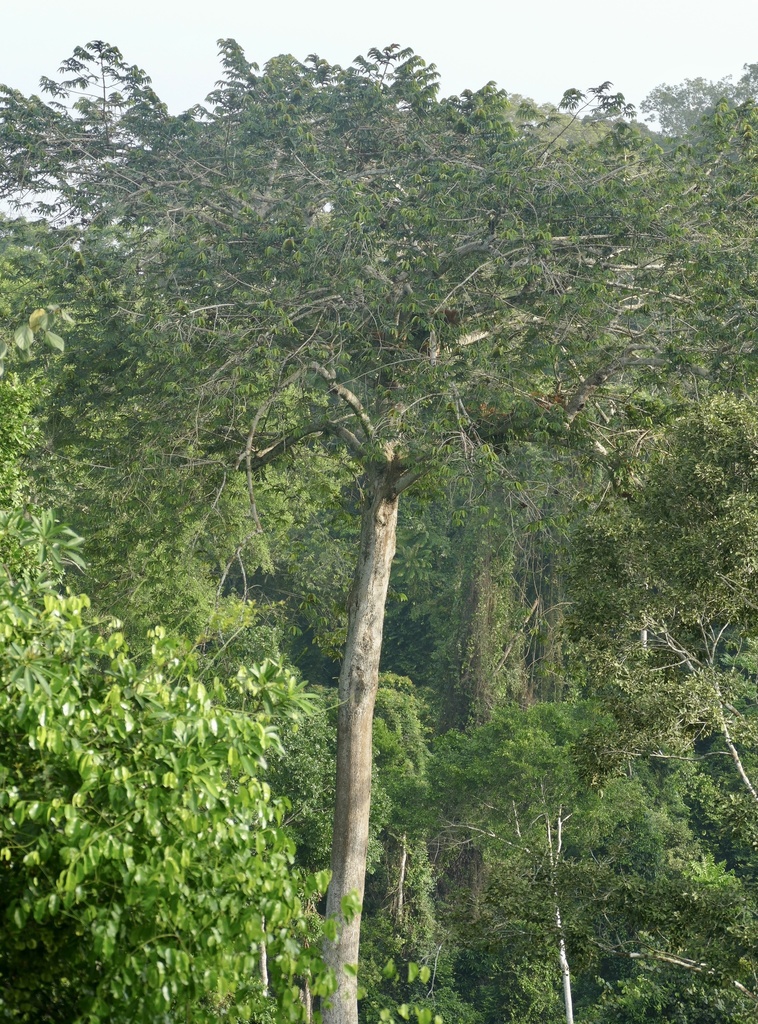
Pycnanthus angolensis
- Origin
- Africa
- Part used
- See detailed notebook
- Tradition
- Traditional ethnobotany
Pycnanthus angolensis, also called false nutmeg or "blood wood" in some regions of West and Central Africa, is a tall tree of humid forests whose bark oozes a reddish sap, giving rise to its evocative vernacular names. Traditional healers across several forest regions have long recognized its place in local pharmacopoeias, particularly to support the body against infection. Its wood, bark, and seeds each have their own uses, passed down orally through generations.
Traditional uses
Traditional support against fevers
The bark is traditionally used as a decoction in certain forest regions to support the body during feverish or infectious states.
Care for wounds and skin conditions
The reddish sap and crushed bark are reported as traditional local applications on wounds, injuries, or skin irritation.
Traditional use against intestinal troubles
In some communities, a bark-based preparation is traditionally used to soothe temporary digestive upset, particularly diarrhea.
Traditional relief of diffuse pain
The bark, and sometimes the roots, go into local preparations meant to relieve bodily or rheumatic pain in African traditional medicine.
Before you use it
This plant is only sparsely documented by modern scientific research; its use should remain under the guidance of a traditional healer or an informed healthcare professional. The sap and certain bark compounds may present toxicity at high doses or with prolonged use, not yet fully characterized. Avoid in pregnant or breastfeeding women, as well as young children, as a precaution in the absence of reliable data. Do not combine with ongoing medication without medical advice, as interactions cannot be ruled out.
The detailed notebook
- Prepared as a paste or decoction
- Traditional duration of use
- Known contraindications
- Related species and their uses
Where to find it
Partner herbalists — available with the detailed notebook.
Sources
Wikipedia