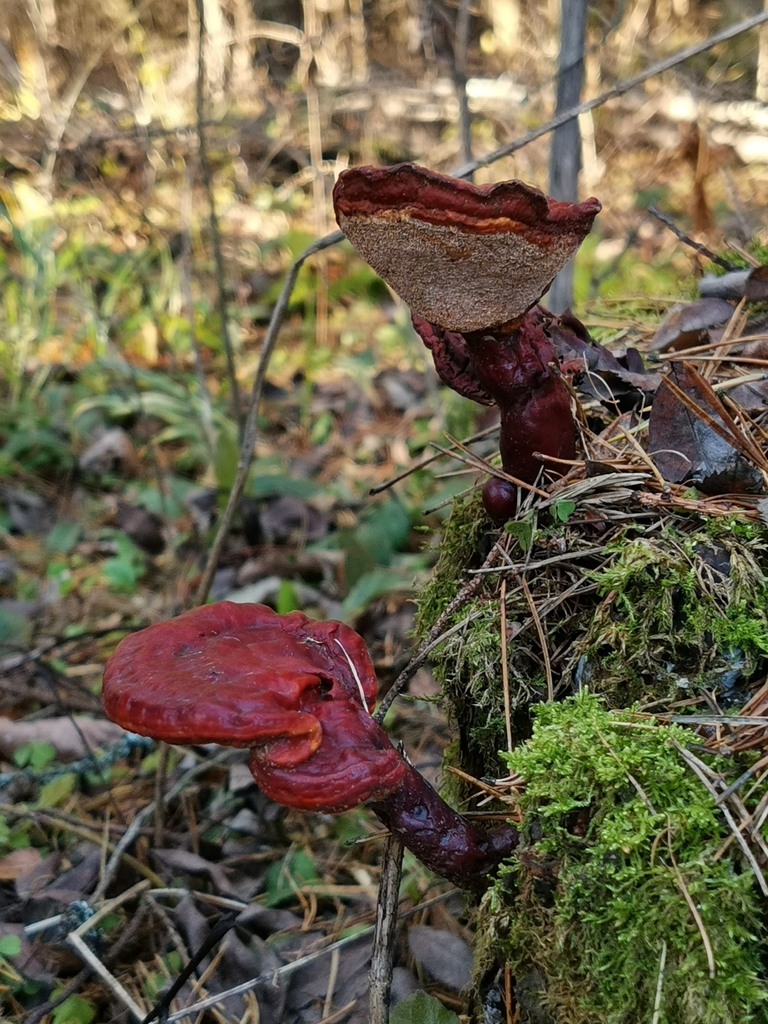
Reishi
- Origin
- Asia
- Part used
- See detailed notebook
- Tradition
- Traditional ethnobotany
A mushroom revered for millennia in China under the name Lingzhi, Reishi held a special place in Taoist pharmacopeia, where it was nicknamed the "mushroom of immortality." Once reserved for emperors and monks, it symbolized longevity and harmony between body and mind.
Traditional uses
Traditional support against fatigue
In Chinese medicine, Reishi was used to calm the mind and help with periods of prolonged fatigue or nervous tension.
A traditional constitutional tonic
Considered a great foundational tonic, it was traditionally consumed to support the body's natural defenses over time.
A mushroom of longevity
Associated with Shen, the vital spirit according to Chinese theory, it was reputed to promote general vitality and harmonious aging.
A traditional use for the respiratory sphere
Certain traditions report its use to help with respiratory comfort, particularly in frail or elderly people.
What to know before use
Do not use in cases of anticoagulant or antiplatelet treatment, as Reishi may thin the blood. Not recommended during pregnancy and breastfeeding in the absence of sufficient data. May interact with certain immunosuppressant or antihypertensive treatments: seek medical advice before any course. Avoid in cases of coagulation disorders or before surgery.
The detailed notebook
- Prepared as a paste or decoction
- Traditional duration of use
- Known contraindications
- Related species and their uses
Where to find it
Partner herbalists — available with the detailed notebook.
Sources
PFAF