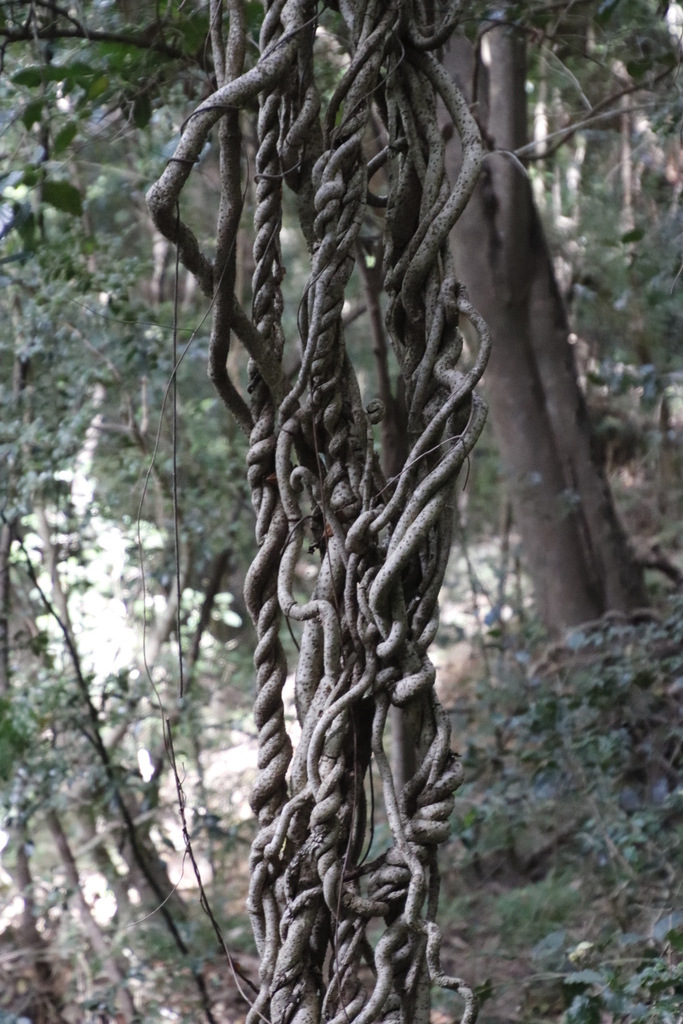
Rhoicissus tomentosa
- Origin
- Africa
- Part used
- See detailed notebook
- Tradition
- Traditional ethnobotany
Beneath the canopy of southern Africa's coastal forests, the wild vine — Rhoicissus tomentosa — has climbed along trees since time immemorial. The Zulu and Xhosa peoples, among others, have long given it a place in their traditional practices, both for the roots and the leaves. Its very name, "vine," recalls its kinship with climbing plants cultivated elsewhere for their fruit.
Traditional uses
Traditional pregnancy support
In certain South African traditions, a root decoction was used to support the end of pregnancy and prepare for childbirth. This highly specific use should never be replicated without the guidance of a healthcare professional.
Easing digestive troubles
Leaves and roots were traditionally used as a decoction to relieve stomach ache and common digestive troubles.
Traditional wound care
Sap and crushed leaves were applied externally to wounds, cuts, and skin conditions, according to reported folk uses.
Rubs against pain
A root-based preparation was sometimes used as a rub to relieve joint and muscle pain, according to local oral tradition.
Before you use it
A traditional use linked to pregnancy and childbirth: to be avoided without the advice of a healthcare professional, due to poorly documented risks for mother and child. Scientific data on this plant's toxicity and interactions remain limited; caution is warranted for any internal use. Avoid any internal use in pregnant or breastfeeding women, as well as in children, outside a locally guided traditional setting. Do not use as a substitute for prescribed medical treatment, particularly for chronic or severe conditions.
The detailed notebook
- Prepared as a paste or decoction
- Traditional duration of use
- Known contraindications
- Related species and their uses
Where to find it
Partner herbalists — available with the detailed notebook.
Sources
Wikipedia