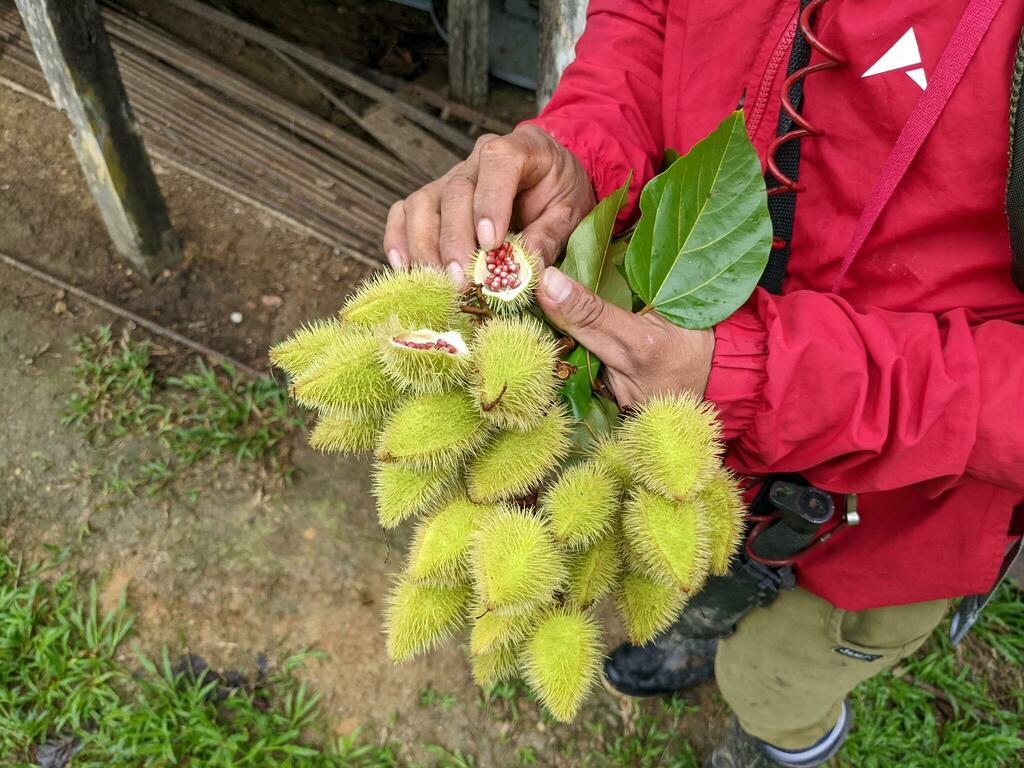
Annatto
- Origin
- North America
- Part used
- Seeds/fruits
- Tradition
- Traditional ethnobotany
Annatto, a shrub of the warm regions of the Americas, has been recognized for centuries by Indigenous peoples for the orange-red pulp surrounding its seeds. A dye, sun protector, and remedy of traditional pharmacopoeia, it held a prized place in the daily life of Amazonian and Central American communities. Its very name evokes this brilliant tint, used as much on the skin as in culinary preparations.
Traditional uses
Skin protection and care
The seed pulp was traditionally applied to the skin to protect it from sun and insects, and to soothe minor irritations and superficial cuts.
Traditional digestive support
A decoction of the seeds was sometimes used in certain communities to accompany difficult digestion.
Traditional use for fever
The seeds and leaves were used as a decoction in tropical American folk medicine to accompany feverish states.
Body dye and ceremonial use
The red paste extracted from the seeds was traditionally used to paint the body and face, for ornamental, ceremonial, and protective purposes.
Before you use it
Avoid application to broken or very sensitive skin without a professional's advice. Internal use should be reserved for after consulting a health professional, as traditional documentation for this use remains limited. May strongly stain skin and fabric; perform a preliminary skin test. Not advised for internal use during pregnancy or breastfeeding, for lack of sufficient data.
The detailed notebook
- Prepared as a paste or decoction
- Traditional duration of use
- Known contraindications
- Related species and their uses
Where to find it
Partner herbalists — available with the detailed notebook.
Sources
Wikipedia