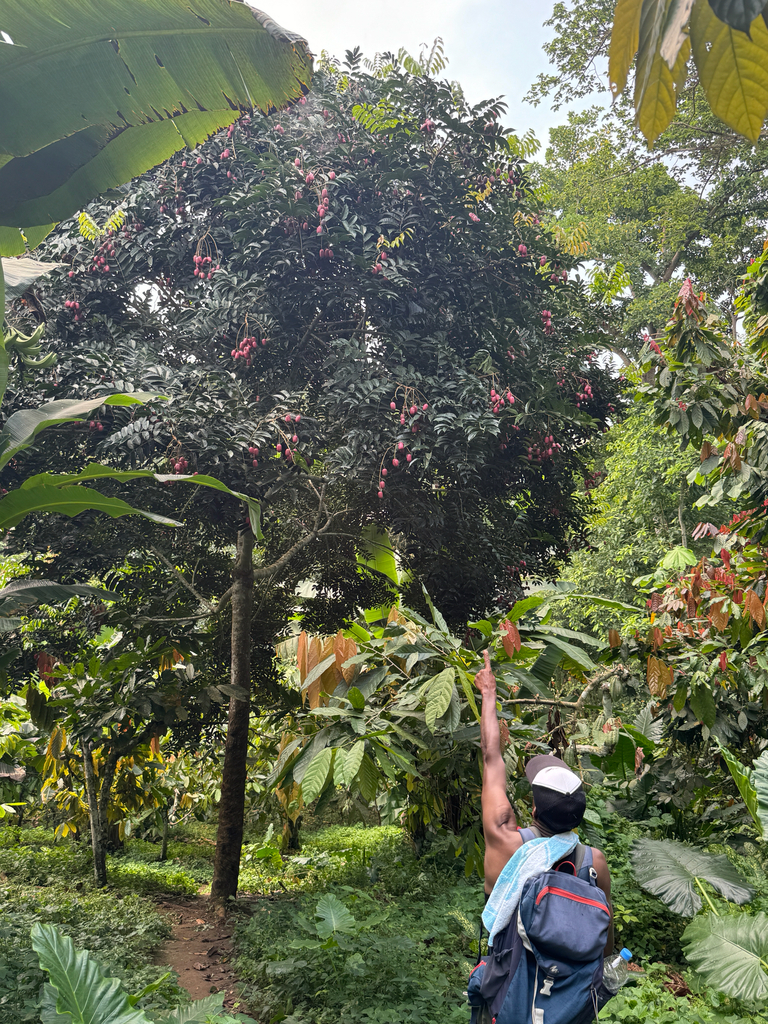
Safou
- Origin
- Africa
- Part used
- See detailed notebook
- Tradition
- Traditional ethnobotany
The safou tree, a majestic tree of the forests and gardens of Central Africa, is known above all for its fruit, the safou, valued for generations as a nourishing food. Beyond its rich, flavorful flesh, the bark, leaves, and resin of this tree also found a place in the traditional practices of local healers. Its wood and resinous gum were likewise counted among the useful resources of everyday village life.
Traditional uses
Traditional digestive support
A bark decoction was traditionally drunk in Central Africa to soothe stomach ache and aid digestion after heavy meals.
Care for wounds and skin conditions
Resin and crushed bark were applied externally to wounds, skin conditions, or irritation, according to the knowledge of local healers.
Soothing the respiratory tract
Bark or leaf decoctions were sometimes used for coughs or mild respiratory conditions in traditional Bantu pharmacopoeia.
Fortifying fruit food
The rich pulp of the safou, eaten cooked or grilled, was traditionally valued as an energizing, restorative food in everyday eating.
Before you use it
The therapeutic use of the bark and resin remains poorly documented scientifically; consulting a healthcare professional is recommended before any internal use. The fruit should always be eaten ripe and after cooking or soaking, as the raw or unripe fruit can irritate the mucous membranes. Avoid self-medication in pregnant or breastfeeding women and in young children, for lack of sufficient safety data. Do not exceed traditional food uses without the advice of a traditional healer or qualified healthcare professional.
The detailed notebook
- Prepared as a paste or decoction
- Traditional duration of use
- Known contraindications
- Related species and their uses
Where to find it
Partner herbalists — available with the detailed notebook.
Sources
PFAF