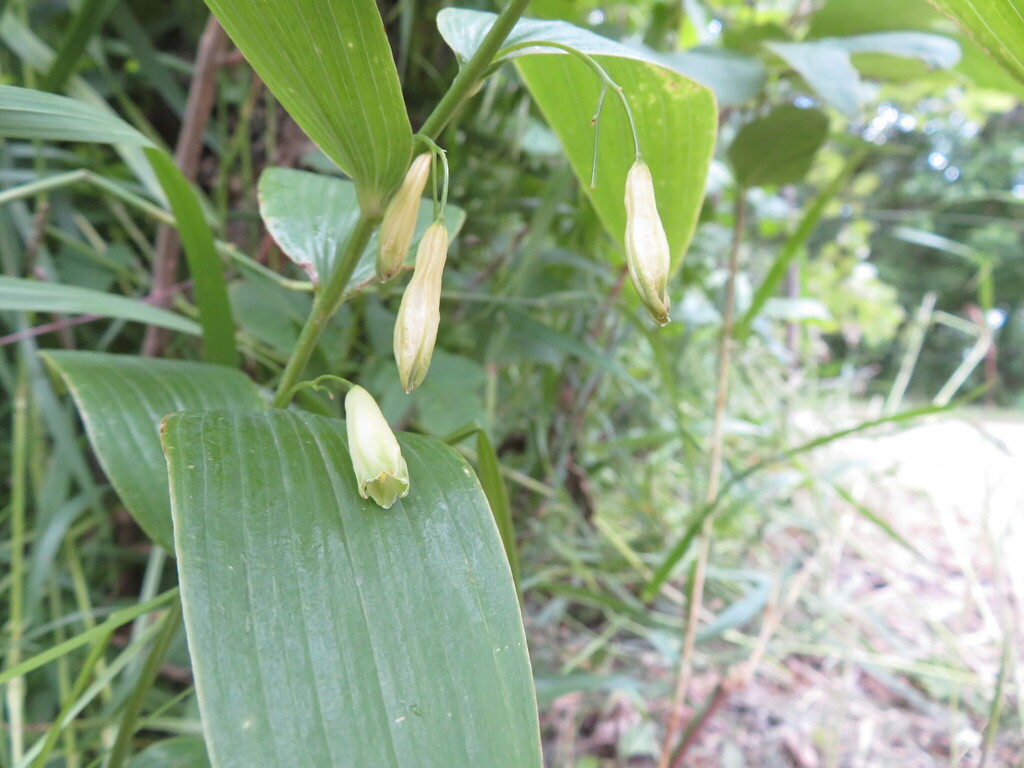
Solomon's Seal
- Origin
- North America
- Part used
- See detailed notebook
- Tradition
- Traditional ethnobotany
Beneath the canopies of North America, Solomon's seal unfurls its arching stem, adorned with small discreet bells and marked, each autumn, with a seal-shaped scar on its rhizome. Indigenous nations and, later, European settlers saw in it a precious root, used in poultices and decoctions to relieve bruised bodies. Its very name evokes an ancient wisdom, that of a plant said to bear the seal of King Solomon.
Traditional uses
Poultice for bruises
The fresh rhizome, crushed or grated, was traditionally applied as a poultice on bruises, sprains, and painful joints by Indigenous herbalists and settlers.
Care for skin inflammation
The crushed root was used externally to soothe irritated skin, insect stings, or minor wounds.
Traditional rhizome decoction
A light decoction of the dried root was sometimes drunk to accompany digestive troubles, following uses passed down by North American folk medicine.
Traditional postpartum use
Certain Indigenous traditions report a use of the root around the time of childbirth, a use that nonetheless remains poorly documented and should be approached with great caution today.
Before you use it
The raw rhizome contains irritant compounds (notably saponins and calcium oxalate) that may cause digestive trouble or irritation if ingested in significant amounts or poorly prepared. The berries of Solomon's seal are considered toxic and must never be eaten. Internal use, pregnancy, breastfeeding, and use in children require the prior advice of a health professional, as current data are insufficient. Confusion is possible with other plants bearing similar berries or rhizomes growing in the same woodlands; certain identification is essential before any harvest.
The detailed notebook
- Prepared as a paste or decoction
- Traditional duration of use
- Known contraindications
- Related species and their uses
Where to find it
Partner herbalists — available with the detailed notebook.
Sources
PFAF, Wikipedia