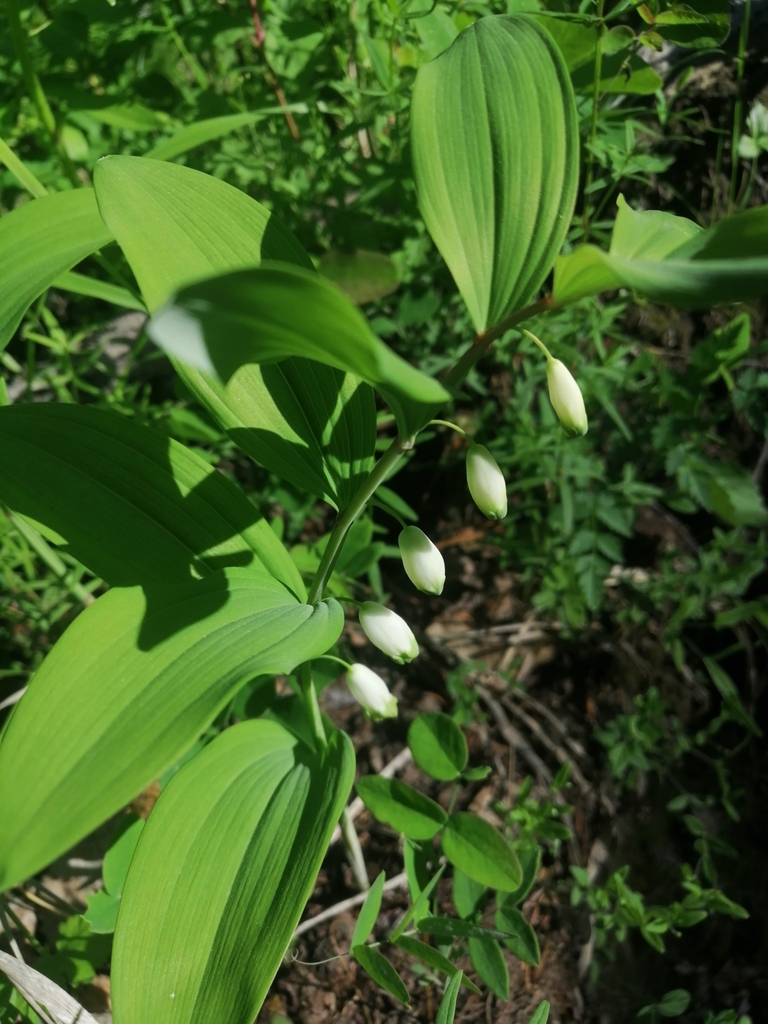
Angular Solomon's seal
- Origin
- Europe
- Part used
- See detailed notebook
- Tradition
- Traditional ethnobotany
In the gentle shade of Europe's woodlands, angular Solomon's seal unfurls its arching stems and quiet bell-shaped flowers. Its very name recalls a mysterious seal, said by legend to have been left by King Solomon on the cut rhizome, a sign of a plant long surrounded by beliefs and herbalist lore. The old herbalists used it with caution, ranking it among the simples to be handled with judgment.
Traditional uses
Traditional care for bruises
The rhizome, applied as a poultice, was traditionally used to calm the appearance of bruises and skin contusions, hence its old folk nickname of "bruisewort root."
Rubs for joint pain
Used externally, a rhizome-based preparation was sometimes rubbed onto sore areas, particularly for joint discomfort or mild rheumatism, according to European folk tradition.
Traditional complexion lightening
The fresh rhizome was once rubbed on the skin of the face in some rural traditions, in the hope of fading spots and redness, an old cosmetic use rather than a proven therapeutic treatment.
Old use for coughs
Some old herbalist notebooks mention a mild rhizome decoction to relieve coughing, a use now fallen out of favor and poorly reliably documented.
Before you use it
The rhizome and berries are considered toxic when taken internally: nausea, vomiting, and digestive trouble can occur with inappropriate ingestion, so this plant should be reserved for traditional external use. To be avoided in pregnant or breastfeeding women, as well as children, in the absence of reassuring data. Do not confuse it with other woodland species with similar leaves (risk of confusion with toxic plants); certain identification is essential before any harvesting. Seek the advice of a health professional or a qualified herbalist before any use, even external, given the plant's toxicity profile.
The detailed notebook
- Prepared as a paste or decoction
- Traditional duration of use
- Known contraindications
- Related species and their uses
Where to find it
Partner herbalists — available with the detailed notebook.
Sources
Wikipedia