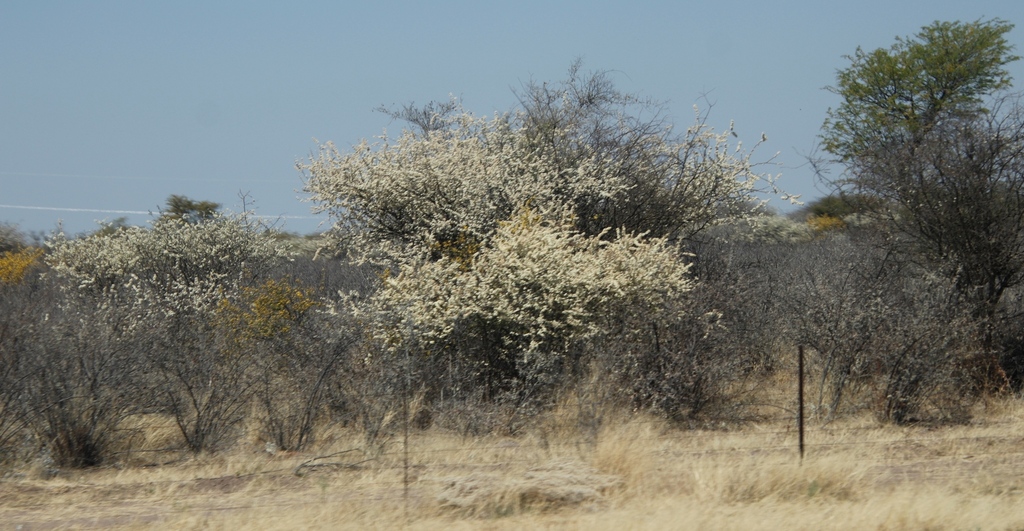
Senegalia mellifera
- Origin
- Africa
- Part used
- See detailed notebook
- Tradition
- Traditional ethnobotany
Beneath the arid skies of southern and eastern Africa, Senegalia mellifera — once classed among the Acacias — grows as a fragrant, thorny shrub whose honey-bearing flowers have fed bees and folk sayings alike. Pastoral communities credited it with many virtues, for both livestock and people, passed down through generations around the bush fire. Its hard wood and tannin-rich bark also made it a quiet pillar of everyday life.
Traditional uses
Bark in traditional digestive use
The tannin-rich bark was traditionally decocted to soothe mild digestive troubles and diarrhea, according to uses reported among several pastoral peoples of southern Africa.
Traditional wound care
Applied externally, the bark or resin was used to clean and tighten minor wounds, in the astringent logic typical of plant tannins.
Roots and old cough remedy
Some oral traditions mention a root decoction to relieve coughs and sore throats, though this use is less documented in written sources.
Honey and forage resource
Its abundant flowers make it a well-regarded honey plant, and its foliage has long served as supplementary livestock forage in the dry season.
Before you use it
Certain parts of Senegalia mellifera contain compounds whose potential toxicity is not fully documented scientifically; caution is warranted, particularly for any internal use. Avoid any internal use in pregnant or breastfeeding women, as well as young children, for lack of sufficient safety data. Do not exceed occasional, one-off use without the advice of a healthcare professional or an experienced herbalist familiar with this specific species. The shrub's thorns can cause wounds that become infected easily; any deep wound should be monitored.
The detailed notebook
- Prepared as a paste or decoction
- Traditional duration of use
- Known contraindications
- Related species and their uses
Where to find it
Partner herbalists — available with the detailed notebook.
Sources
PFAF