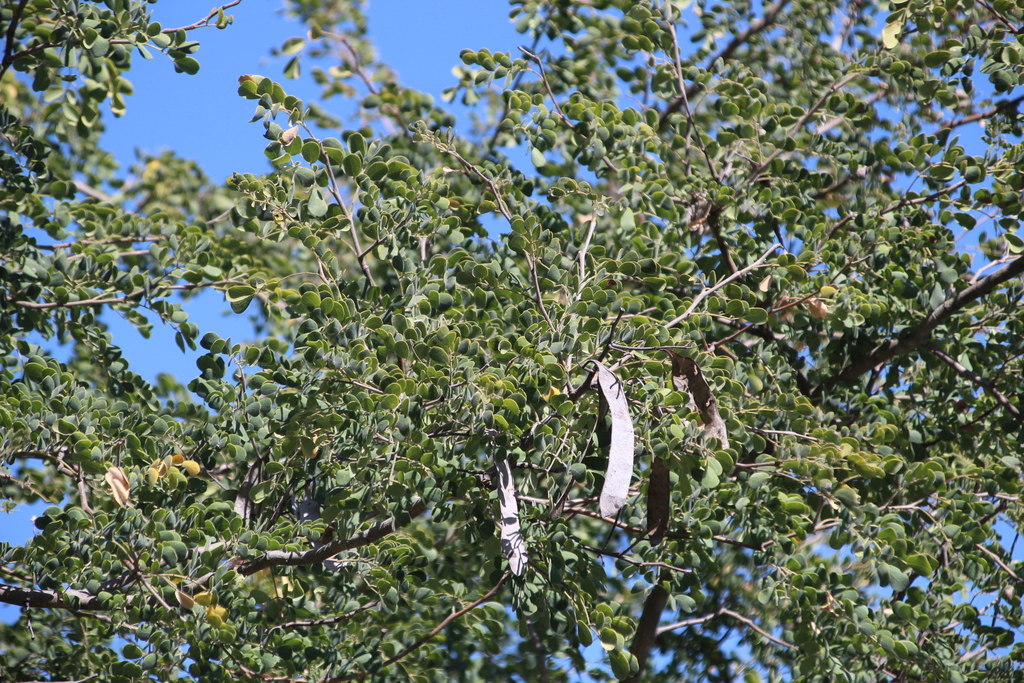
Senegalia senegal
- Origin
- Africa
- Part used
- See detailed notebook
- Tradition
- Traditional ethnobotany
Beneath the thorny canopy of the Sahelian savannas, Senegalia senegal — which old herbals called the acacia of Senegal — has long been revered less for its roots than for its precious gum. West African traditions, however, report a more discreet use of its root, passed down through generations along the salt and gum-arabic caravan routes. This entry gathers this old knowledge for purely historical purposes.
Traditional uses
Easing digestive troubles
A root decoction was traditionally drunk to calm stomach ache and diarrhea, according to uses reported in several Sahelian regions.
Traditional mouth care
Chewed root sticks or mouthwash decoctions were used by the elders for gum hygiene and to soothe oral irritation.
External use on minor wounds
As a concentrated decoction, the root was sometimes used as an external wash to clean minor wounds or skin irritation, according to old rural practices.
Traditional remedy against fever
Some oral traditions mention the use of a root decoction against feverish states, as part of scientifically poorly documented folk remedies.
Before you use it
Traditional use is poorly documented scientifically: caution requires consulting a healthcare professional before any use. Not recommended for pregnant or breastfeeding women, for lack of sufficient safety data. Do not give to young children without medical advice. Avoid if undergoing medication treatment, as a precaution against unstudied interactions.
The detailed notebook
- Prepared as a paste or decoction
- Traditional duration of use
- Known contraindications
- Related species and their uses
Where to find it
Partner herbalists — available with the detailed notebook.
Sources
PFAF, Wikipedia