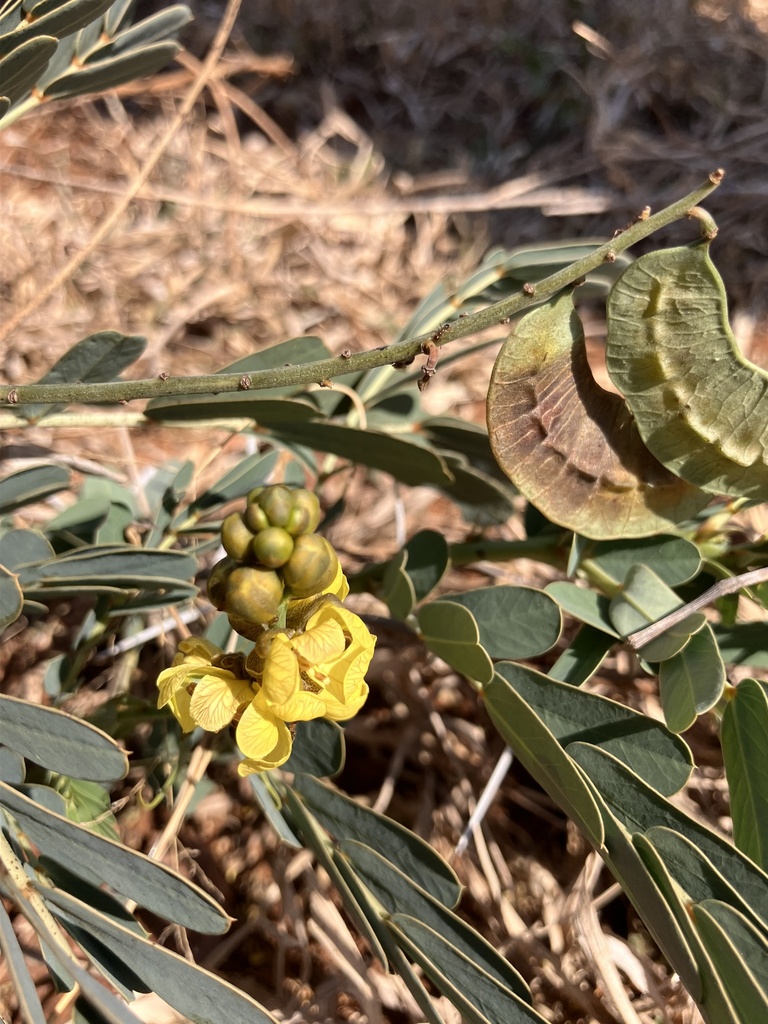
Senna italica
- Origin
- Africa
- Part used
- See detailed notebook
- Tradition
- Traditional ethnobotany
Italian senna, the African cousin of the better-known commercial sennas, holds an old place in the continent's traditional pharmacopoeias. Its leaves and root were gathered by healers for their purgative properties, passed down through generations across North Africa and the Sahel. A respected plant, but one whose use always demanded measure and discernment.
Traditional uses
Occasional constipation
The leaves of Senna italica were traditionally used as a laxative to relieve episodes of temporary constipation, in the manner of other senna species used around the world.
Purging and intestinal cleansing
The root, often as a decoction, was used in certain African traditions for occasional purges, particularly during seasonal purification rituals.
Traditional use in children
In certain regions, highly diluted preparations of Italian senna were given to children to relieve mild digestive troubles, always in restricted doses and under the elders' watch.
Traditional external application
Leaf decoctions were sometimes used externally to cleanse certain mild skin conditions, according to less well-documented local practices.
Before you use it
Never use in pregnancy, breastfeeding, or in children without the advice of a healthcare professional, due to its powerful purgative effect. Prolonged or repeated use can lead to bowel dependency and electrolyte imbalance; reserve for occasional use. Not recommended in cases of intestinal obstruction, inflammatory bowel disease, or unexplained abdominal pain. May interact with certain medications, particularly diuretics and heart treatments; seek advice before any use.
The detailed notebook
- Prepared as a paste or decoction
- Traditional duration of use
- Known contraindications
- Related species and their uses
Where to find it
Partner herbalists — available with the detailed notebook.
Sources
Wikipedia