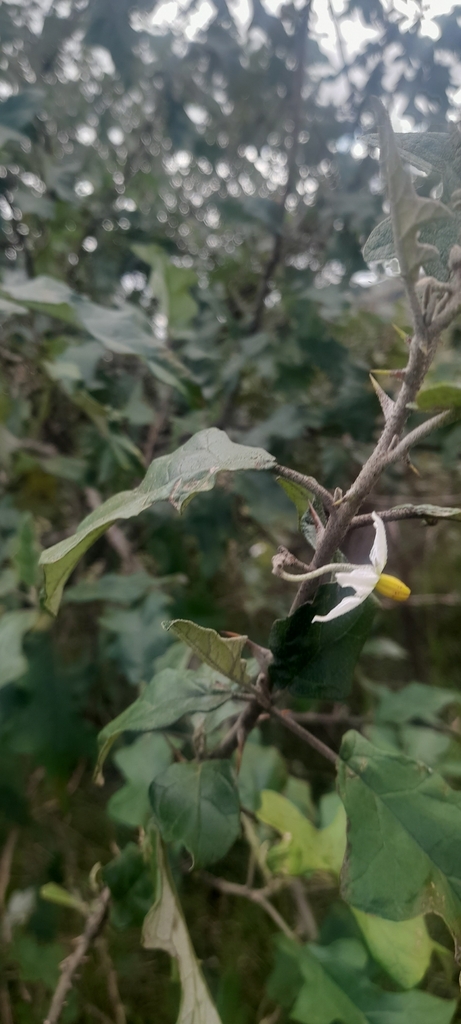
Solanum aculeastrum
- Origin
- Africa
- Part used
- See detailed notebook
- Tradition
- Traditional ethnobotany
Solanum aculeastrum, sometimes called the "Sodom apple" in the southern African regions where it grows, is a thorny shrub of the nightshade family, well known to traditional healers for its bitter yellow fruit. Long treated with both respect and caution, it holds a particular place in the folk pharmacopoeias of South Africa, Zimbabwe, and neighboring regions.
Traditional uses
Traditional care for skin conditions
The fruit, made into an external preparation, was traditionally applied to certain skin conditions, particularly stubborn warts or wounds, according to uses reported in southern Africa.
Traditional use against toothache
In certain folk traditions, the juice or pulp of the fruit was applied locally to soothe tooth or gum pain.
Traditional use in livestock medicine
Traditional healers of southern Africa report an old use of this plant in the empirical treatment of certain livestock ailments.
Plant associated with symbolic practices
Beyond its physical uses, the plant is sometimes mentioned in traditional practices with symbolic or protective intent within certain communities.
Before you use it
A toxic plant: the fruit contains steroidal alkaloids (solasonine, solamargine) that can cause severe digestive and neurological trouble if ingested. Internal use is strongly discouraged without the guidance of a qualified professional precisely familiar with this species. Must be kept strictly out of reach of children and pets; cases of livestock poisoning are documented. Never use during pregnancy or breastfeeding, due to the lack of safety data and the known toxic risk.
The detailed notebook
- Prepared as a paste or decoction
- Traditional duration of use
- Known contraindications
- Related species and their uses
Where to find it
Partner herbalists — available with the detailed notebook.
Sources
PFAF, Wikipedia