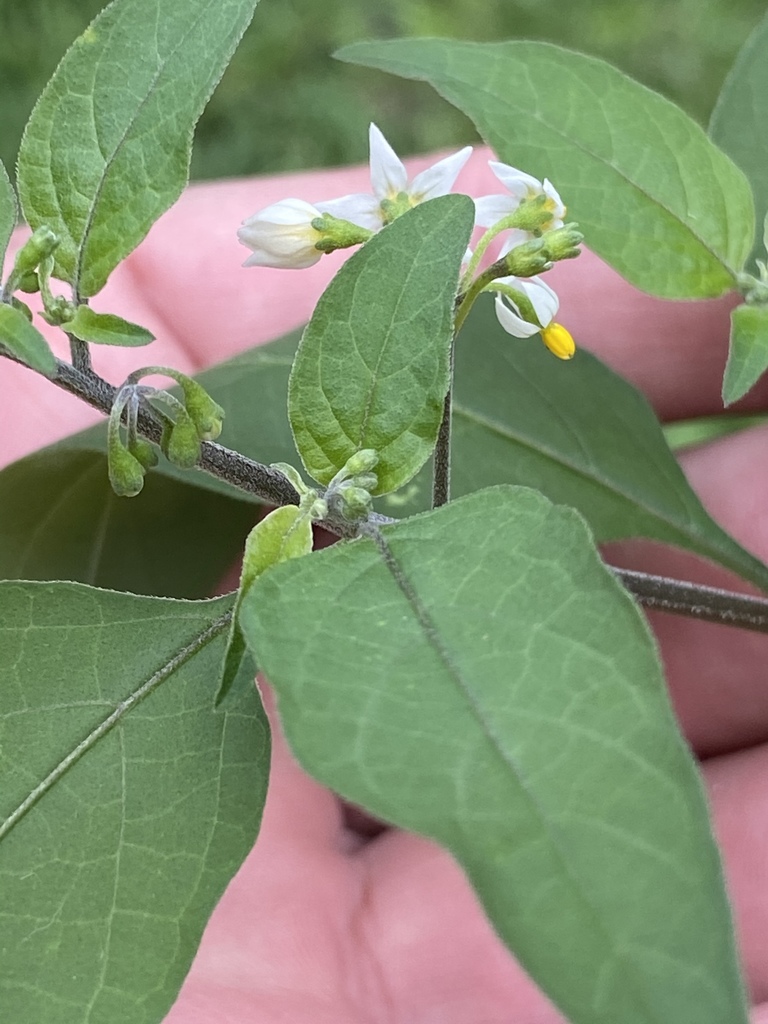
Solanum americanum
- Origin
- Africa
- Part used
- See detailed notebook
- Tradition
- Traditional ethnobotany
In Africa, American black nightshade (Solanum americanum), sometimes confused with its Solanum cousins, has long held a discreet but persistent place in gardens and folk knowledge. Its young shoots and leaves, once properly prepared, have fed and healed many households, while its ripe berries call for particular vigilance. This entry gathers the traditional uses reported around this modest but historically rich plant.
Traditional uses
Cooked leaves as a traditional vegetable
In several regions of Africa, the well-cooked young leaves of Solanum americanum are eaten as a vegetable, said to soothe mild digestive troubles and serve as a restorative food.
Application on skin conditions
Crushed leaf pulp or a decoction has traditionally been applied as a poultice on wounds, boils, and skin irritation.
Traditional use against fever
A leaf decoction was sometimes used in folk medicine to accompany feverish states or mild inflammation.
Traditional respiratory support
Some traditions report the use of leaf infusions to soothe coughs and sore throats, alongside other remedies.
Before you use it
The whole plant, and particularly unripe or green berries, contains alkaloids (solanine and related compounds) that are potentially toxic: only prolonged cooking of the leaves, with a change of water, is traditionally practiced before eating. Berries, even ripe, should not be eaten without absolute certainty of identification and ripeness, due to the risk of confusion with toxic related species. Use is discouraged in pregnant or breastfeeding women, as well as young children, for lack of sufficient safety data. If in doubt about plant identification or if undergoing medication treatment, the advice of a healthcare professional or experienced herbalist is essential before any use.
The detailed notebook
- Prepared as a paste or decoction
- Traditional duration of use
- Known contraindications
- Related species and their uses
Where to find it
Partner herbalists — available with the detailed notebook.
Sources
PFAF