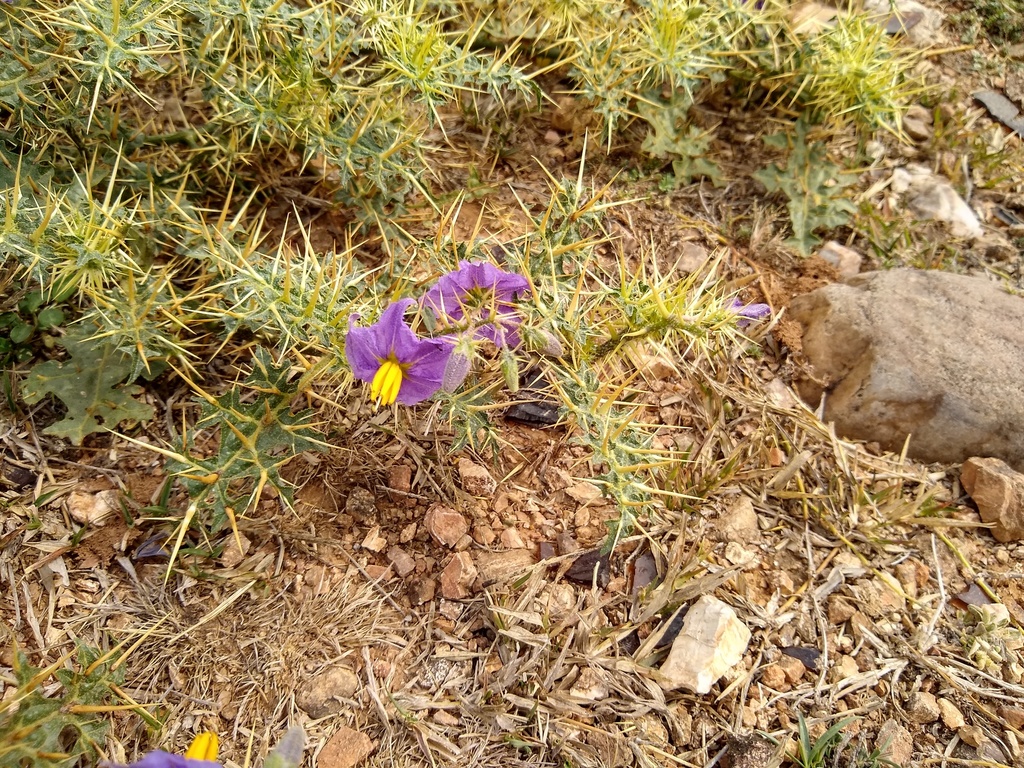
Solanum virginianum
- Origin
- Asia
- Part used
- See detailed notebook
- Tradition
- Traditional ethnobotany
Known in Asia as Kantakari, this thorny nightshade with a yellow fruit veined with green holds an ancient place in traditional Indian pharmacopeia. Ayurvedic texts classify it among the plants intended to support breathing and soothe ailments of the throat and airways. It is still harvested today in the rural regions where it grows wild.
Traditional uses
Traditional cough support
The whole plant, and particularly the root, is traditionally used in Ayurvedic medicine to soothe cough and bronchial irritation.
Comfort in cases of breathlessness
It features in several traditional preparations intended to support respiratory comfort, particularly in cases of shortness of breath or wheezing.
Traditional digestive aid
The fruit was traditionally used to stimulate the appetite and help with difficult digestion.
Use during feverish states
In certain regional traditions, root decoction was used to help with periods of fever and convalescence.
What to know before use
A plant of the nightshade family, containing alkaloids; prolonged or excessive-dose use is not recommended without supervision. Not recommended during pregnancy and breastfeeding in the absence of sufficient safety data. To be avoided in children and if undergoing medication treatment, due to possible interactions. The advice of a health professional or a practitioner qualified in traditional medicine is essential before any use.
The detailed notebook
- Prepared as a paste or decoction
- Traditional duration of use
- Known contraindications
- Related species and their uses
Where to find it
Partner herbalists — available with the detailed notebook.
Sources
PFAF