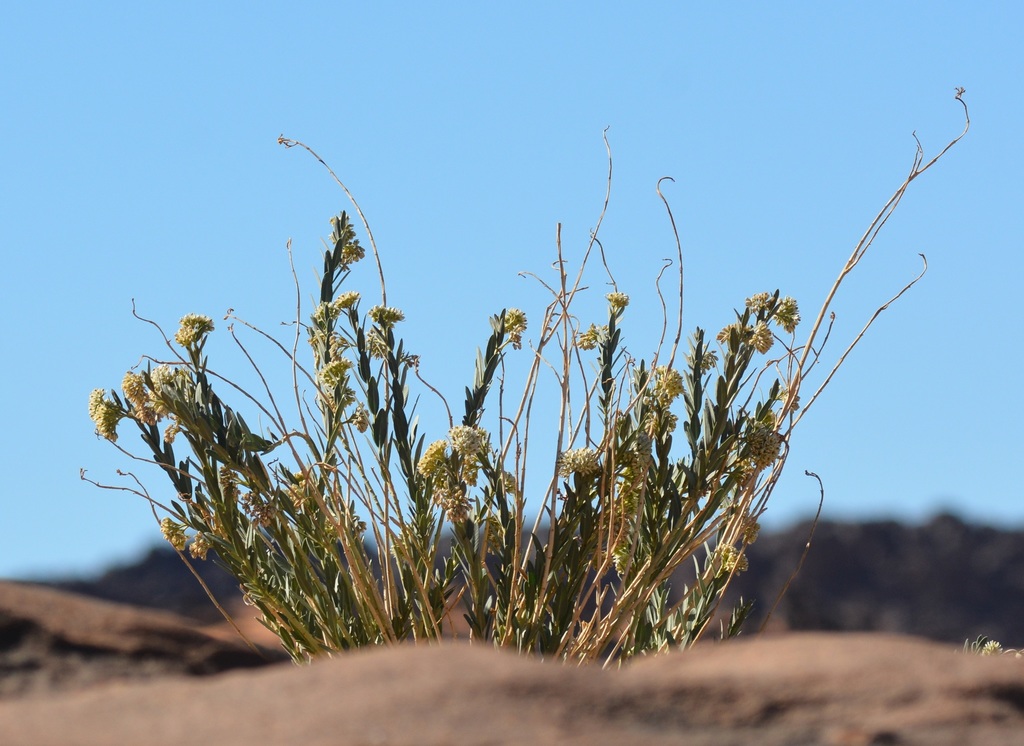
Solenostemma
- Origin
- Africa
- Part used
- See detailed notebook
- Tradition
- Traditional ethnobotany
Solenostemma, known in the arid regions of North Africa and Egypt by the vernacular name "harjal," is a desert plant whose bitter leaves have been known to shepherds and traditional healers for generations. Eaten in small amounts, it held a discreet but steady place in folk uses related to the stomach and to calming the nerves.
Traditional uses
Easing stomach ache
The leaves were traditionally infused to relieve digestive discomfort and bloating, particularly in the desert regions where the plant grows naturally.
Traditional help against anxiety
Some folk traditions report a use of Solenostemma to calm nervousness and promote a form of relaxation, though this has not been scientifically established.
Support for stomach troubles
The plant was sometimes used in small doses as a bitter tonic, in a traditional logic of stimulating appetite and stomach comfort.
Use against mild insomnia
In some Egyptian folk uses, a light preparation of the plant accompanied evening rituals to promote more peaceful sleep.
Before you use it
Solenostemma contains compounds whose potential toxicity at high doses is documented; its use should remain occasional and supervised by a professional familiar with the plant. Not recommended for pregnant or breastfeeding women, for lack of sufficient safety data. Avoid in children, due to a lack of studies on tolerance at this age. Do not combine with other sedative plants or treatments without the advice of a healthcare professional, due to possible interactions.
The detailed notebook
- Prepared as a paste or decoction
- Traditional duration of use
- Known contraindications
- Related species and their uses
Where to find it
Partner herbalists — available with the detailed notebook.
Sources
PFAF, Wikipedia