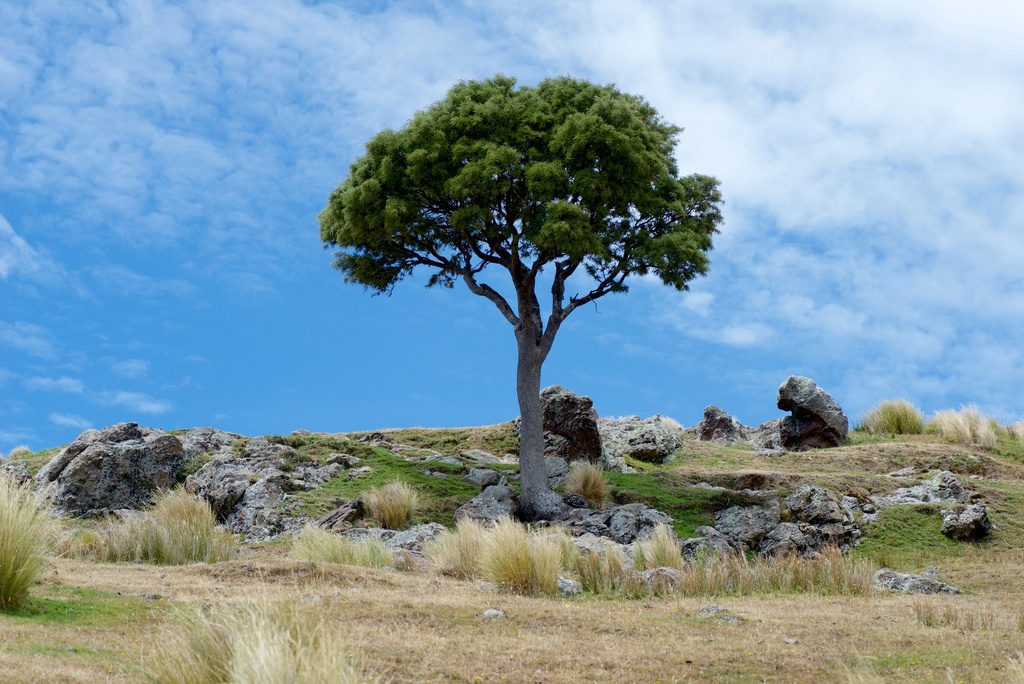
Sophora microphylla
- Origin
- Oceania
- Part used
- Bark
- Tradition
- Traditional ethnobotany
Kōwhai, a tree cloaked in gold, has adorned the shores and forests of New Zealand for centuries, held in high regard by the Māori. Its bark, rich in potent active compounds, was used with caution in traditional Oceanian pharmacopoeias, for external care as well as certain internal ailments.
Traditional uses
Traditional wound care
The bark, applied as a poultice or wash, was traditionally used by Māori healers (tohunga) to clean and soothe skin wounds.
Relief of muscular pain
As a diluted decoction, the bark was used externally to relieve aches and joint pain according to local tradition.
Traditional use against fever
A bark-based preparation was sometimes administered in very small quantities in an attempt to reduce fever, a reported but imprecisely documented use.
An old remedy for digestive troubles
Certain ethnobotanical sources mention an occasional internal use of the bark against stomach aches, always at an extremely measured dose due to its potential toxicity.
What to know before use
The genus Sophora contains quinolizidine alkaloids (including cytisine), potentially toxic even at low doses; any internal use must be supervised by a qualified professional. Never use without the advice of a herbalist or doctor experienced with New Zealand plants, particularly for internal use. Strictly not recommended for pregnant or breastfeeding women, nor for children, due to the toxicity risk. Avoid any prolonged or high-dose use; seeds and bark of other Sophora species have caused documented poisonings.
The detailed notebook
- Prepared as a paste or decoction
- Traditional duration of use
- Known contraindications
- Related species and their uses
Where to find it
Partner herbalists — available with the detailed notebook.
Sources
Wikipedia