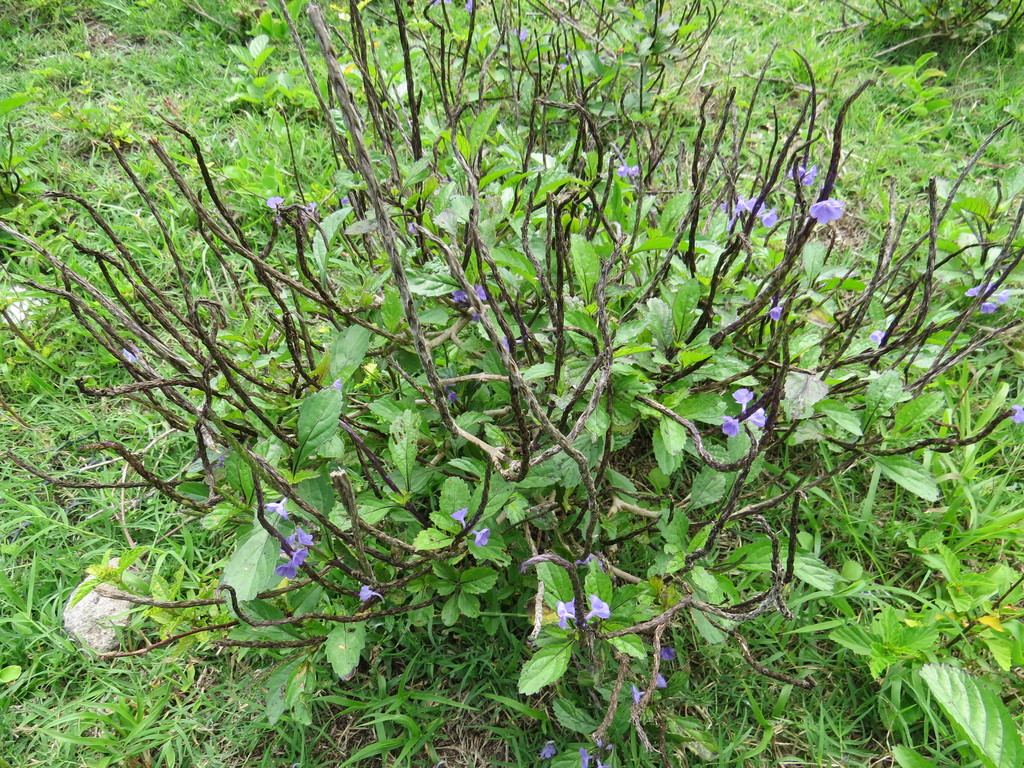
Stachytarpheta cayennensis
- Origin
- South America
- Part used
- Leaves
- Tradition
- Traditional ethnobotany
In the savannas and forest edges of South America, Brazilian blue vervain — Stachytarpheta cayennensis — has long accompanied the folk pharmacopoeias of Amazonia and the Caribbean. Traditional healers regard it as a bitter, refreshing plant, a close cousin of our vervains, used as an infusion to support digestion and soothe everyday minor ailments.
Traditional uses
Support for slow digestion
The leaves were traditionally infused after meals to accompany difficult or sluggish digestion, in keeping with plant bitters.
A folk fever remedy
In several traditions of South America and the Caribbean, the plant was included in preparations meant to accompany feverish states and colds.
A traditional depurative plant
It is among the so-called "depurative" plants of folk remedies, reputed to support liver function during seasonal cleansing regimens.
External use on minor wounds
Crushed leaves, or as a decoction, were sometimes applied externally to the skin, according to local practices that are reported but loosely formalized.
What to know before use
A traditional use poorly documented scientifically outside its native range: caution is called for regarding doses and frequency of use. Some species of the genus Stachytarpheta are mentioned in traditional emmenagogue uses: to be avoided as a precaution during pregnancy and breastfeeding. Do not use in children without the advice of a health professional competent in herbal medicine. Seek the advice of a doctor or pharmacist if undergoing treatment, owing to a lack of data on possible interactions.
The detailed notebook
- Prepared as a paste or decoction
- Traditional duration of use
- Known contraindications
- Related species and their uses
Where to find it
Partner herbalists — available with the detailed notebook.
Sources
PFAF, Wikipedia