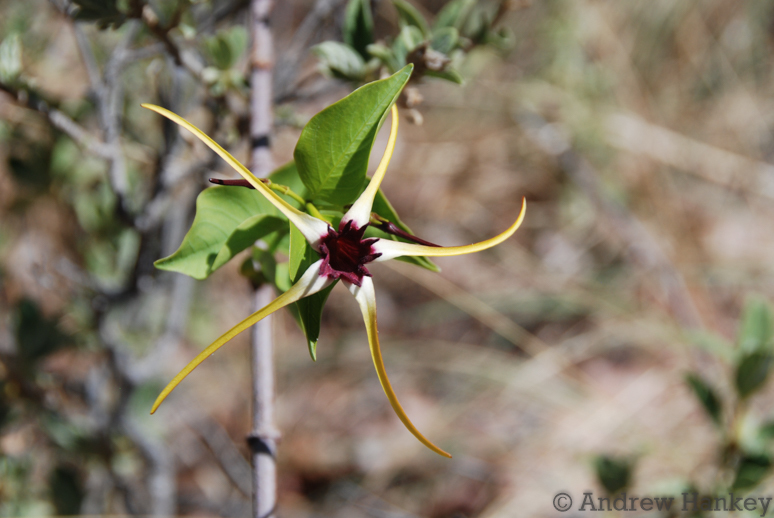
Strophanthus amboensis
- Origin
- Africa
- Part used
- See detailed notebook
- Tradition
- Traditional ethnobotany
Strophanthus amboensis is a climbing shrub of the savannas and open forests of southern and eastern Africa, whose bitter seeds have long drawn the attention of traditional healers. Renowned for its potency, it holds a particular place in local pharmacopoeias, often reserved for experienced hands due to its fearsome nature. Hunting peoples also associated it with the preparation of arrow poison, an old sign of its powerful action on the body.
Traditional uses
Muscle and joint pain
Finely prepared seeds were traditionally used externally, as rubs, to relieve muscle and joint pain. This use generally remained reserved for experienced traditional healers.
Heart tonic in old medicine
In certain West and East African traditions, Strophanthus seeds were used in very small doses as a heart tonic, a practice that in fact inspired the historical pharmaceutical use of cardiotonic glycosides extracted from this genus.
Preparations for hunting poison
The crushed seeds went into the composition of arrow poisons used by certain hunting peoples, testifying to the plant's recognized power across generations.
Application on wounds and skin conditions
Highly diluted preparations based on bark or seeds were sometimes applied locally to certain skin conditions, always with extreme caution regarding the quantities used.
Before you use it
A highly toxic plant: the seeds contain powerful cardiotonic glycosides, potentially fatal at excessive doses. Never use internally without the guidance of a qualified professional trained specifically in this plant. Contraindicated in pregnancy, breastfeeding, children, and in cases of heart conditions or ongoing medication (risk of severe interaction). Keep out of reach, particularly as it was historically used as a hunting poison.
The detailed notebook
- Prepared as a paste or decoction
- Traditional duration of use
- Known contraindications
- Related species and their uses
Where to find it
Partner herbalists — available with the detailed notebook.
Sources
PFAF, Wikipedia