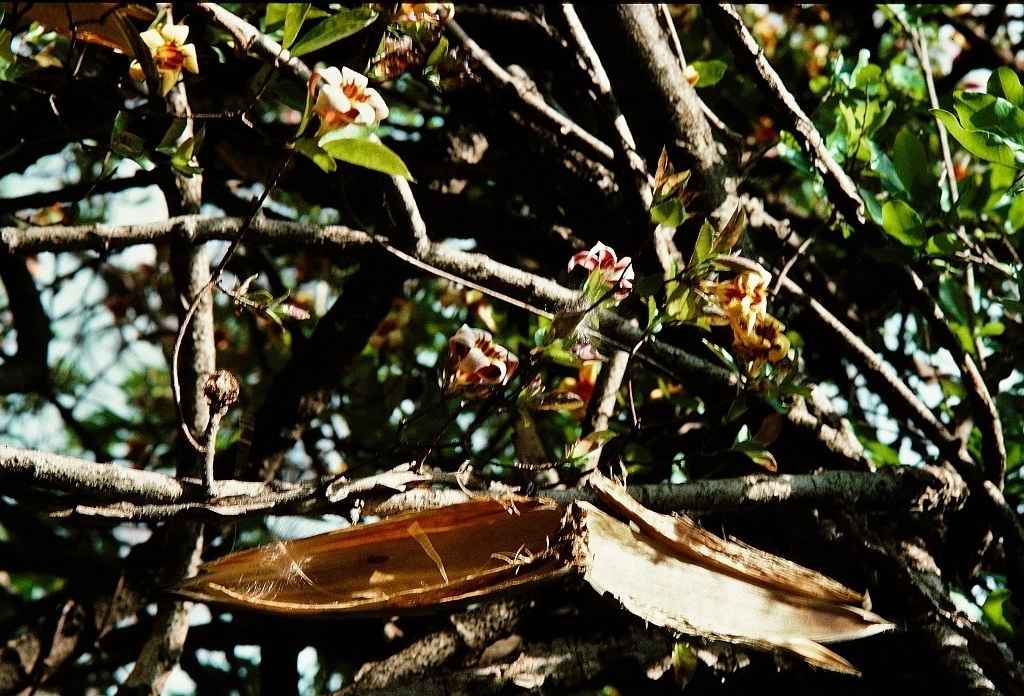
Strophanthus courmontii
- Origin
- Africa
- Part used
- See detailed notebook
- Tradition
- Traditional ethnobotany
Strophanthus courmontii is a vine native to the forests of tropical Africa, whose seeds drew the attention of European botanists and travelers from the late 19th century onward, due to their use by certain peoples in preparing arrow poison. A cousin of other strophanthus species used in early cardiac pharmacology, this plant belongs to a family feared and respected by herbalists for its potency.
Traditional uses
Hunting and arrow poison
The crushed seeds of Strophanthus courmontii have traditionally served, in certain regions of Africa, to prepare arrow poison used for hunting.
Traditional cardiotonic use
Like other species of the genus Strophanthus, this plant has been studied and occasionally used locally for its reported effects on heart rhythm, within a very controlled traditional setting.
Source of compounds studied in pharmacology
Strophanthus seeds historically interested Western pharmacology for the extraction of cardiotonic glycosides, particularly for scientific study.
Before you use it
A highly toxic plant: the seeds contain powerful cardiotonic glycosides that can cause serious heart trouble, even death. Never consume, prepare, or handle this plant without qualified expert guidance; no home use can be recommended. Contraindicated under all circumstances in pregnant or breastfeeding women, children, and in cases of heart disease, due to the life-threatening risk. Serious possible interactions with heart treatments (digitalis in particular): keep strictly away from any self-medication.
The detailed notebook
- Prepared as a paste or decoction
- Traditional duration of use
- Known contraindications
- Related species and their uses
Where to find it
Partner herbalists — available with the detailed notebook.
Sources
PFAF