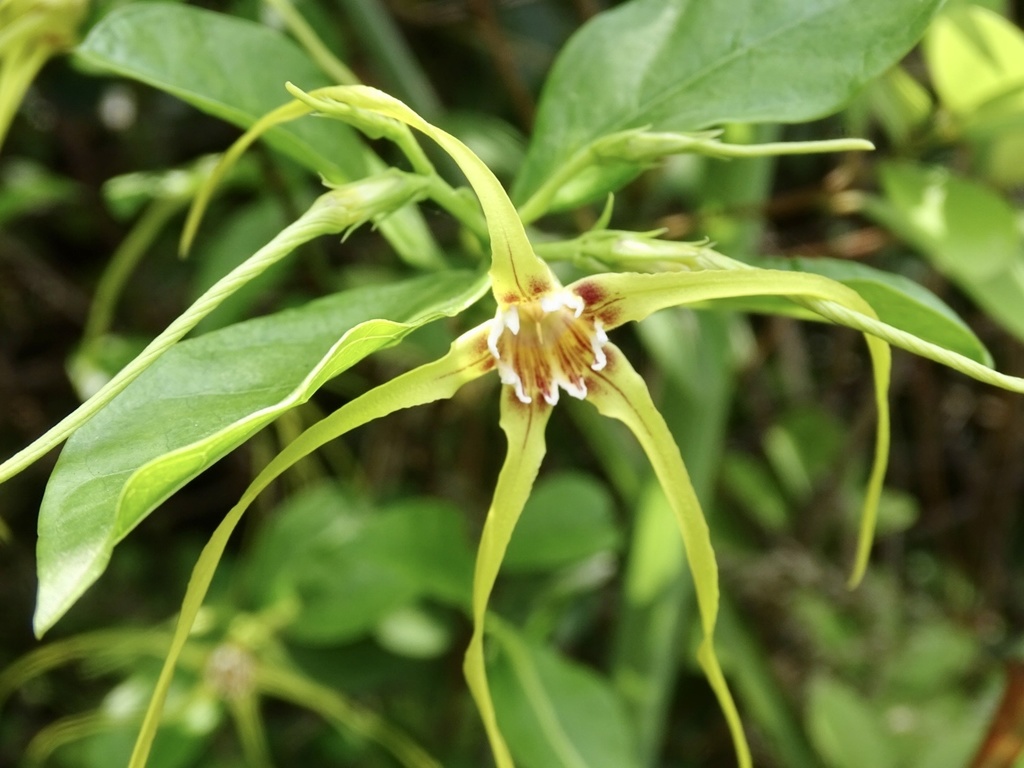
Strophanthus divaricatus
- Origin
- Africa
- Part used
- See detailed notebook
- Tradition
- Traditional ethnobotany
Strophanthus divaricatus is a climbing shrub with delicate, twisted flowers, long known in certain traditional pharmacopoeias of Africa and Asia for the powerful properties of its seeds. Its reputation is old, but comes with an equally old caution, as this plant was also used in preparing hunting poisons.
Traditional uses
Traditional support for a weakened heart
Strophanthus seeds have been used in certain African traditions to support a weakened heart, a use that in fact inspired later pharmacological research on cardiotonic glycosides.
Component of arrow poisons
Historically, the crushed seeds went into the composition of hunting poisons used by certain African peoples, due to their powerful action on the heart muscle.
Traditional remedies for livestock
In a few regions, seed-based preparations are said to have been used very sparingly in traditional livestock care.
Plant surrounded by protective beliefs
Like many toxic plants, Strophanthus has been the subject of beliefs and rituals related to protection or warding off evil spirits in certain local traditions.
Before you use it
A highly toxic plant: the seeds contain powerful cardiotonic glycosides that can cause serious, even fatal, heart trouble. Never use in self-medication; any use must be supervised by a qualified healthcare professional. Contraindicated in pregnancy, breastfeeding, and in people undergoing heart treatment due to major interaction risks. Strictly discouraged for children; even handling the seeds themselves requires caution.
The detailed notebook
- Prepared as a paste or decoction
- Traditional duration of use
- Known contraindications
- Related species and their uses
Where to find it
Partner herbalists — available with the detailed notebook.
Sources
PFAF