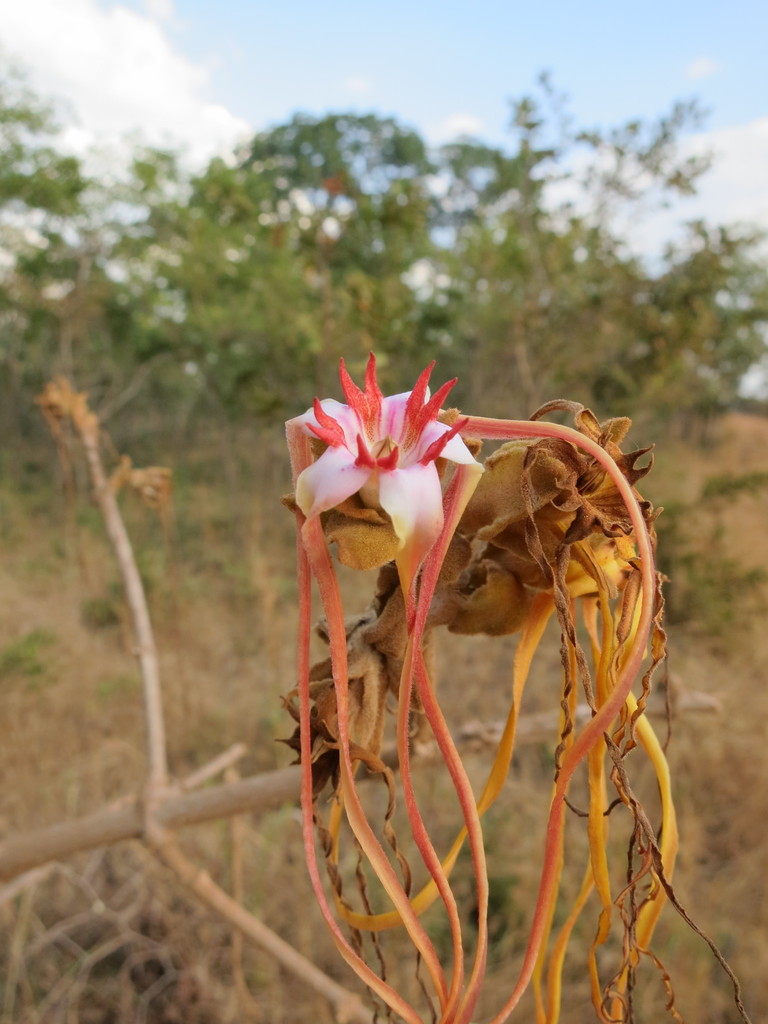
Strophanthus eminii
- Origin
- Africa
- Part used
- See detailed notebook
- Tradition
- Traditional ethnobotany
Strophanthus eminii is a vine of the African tropical forest, whose seeds were used since long ago by certain peoples of East and Central Africa, particularly for making arrow poison. Brought back to Europe by 19th-century explorers and botanists, this plant belongs to a family known for its powerful cardiotonic compounds, related to those of foxglove. Today it remains more an object of historical and pharmacological study than a plant of everyday use.
Traditional uses
Traditional hunting poison
The crushed seeds of Strophanthus eminii went into poisons applied to arrow tips, a use documented among several East African peoples.
Traditional healers' heart tonic
In certain traditional African pharmacopoeias, highly diluted seed-based preparations have been reported as support for a weakened heart, a use related to that of other Strophanthus species used in folk medicine.
Source of studied cardiotonic glycosides
The genus Strophanthus, including this species, provided European researchers with cardiac glycosides that fed the early days of modern cardiovascular pharmacology.
Reported use in local veterinary medicine
Some ethnobotanical sources mention an occasional use of highly diluted preparations for livestock ailments, always with extreme caution regarding doses.
Before you use it
A highly toxic plant: the seeds contain powerful cardiotonic glycosides that can cause cardiac arrest, even at low doses. No non-professional internal use should ever be considered; any preparation is strictly the domain of trained, supervised specialists. Contraindicated in cases of heart disease, pregnancy, breastfeeding, or in combination with cardiotonic treatments (digoxin in particular), due to a serious interaction risk. Keep absolutely out of reach of children and pets; even handling the seeds should be avoided without proper precaution.
The detailed notebook
- Prepared as a paste or decoction
- Traditional duration of use
- Known contraindications
- Related species and their uses
Where to find it
Partner herbalists — available with the detailed notebook.
Sources
PFAF