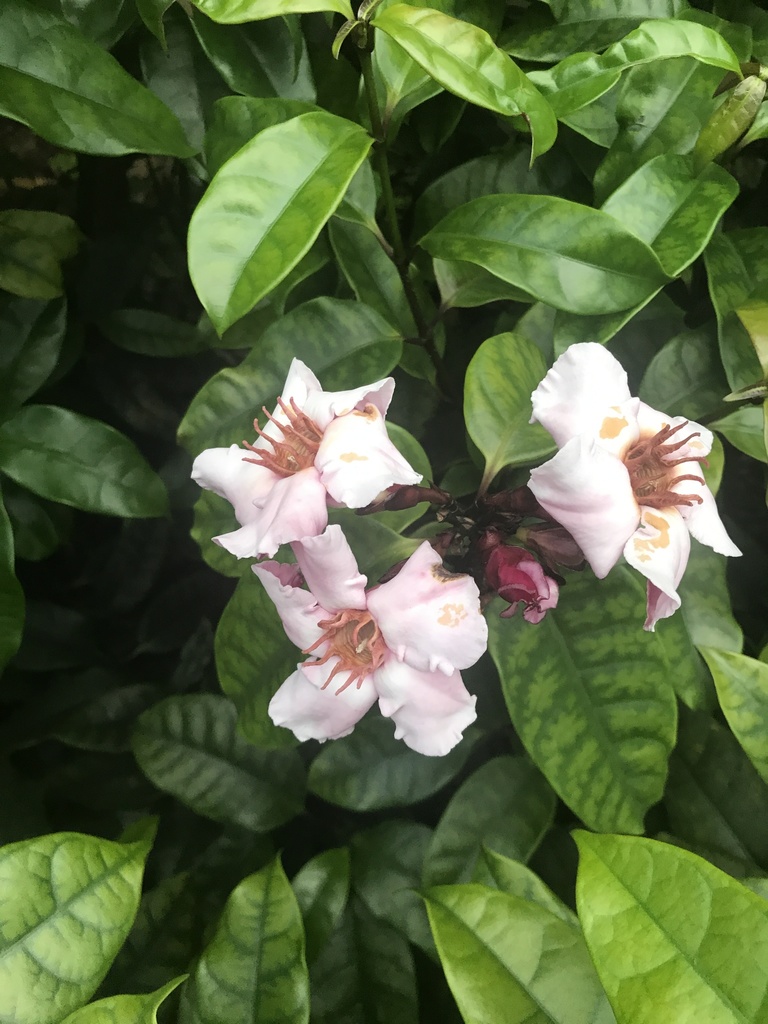
Strophanthus gratus
- Origin
- Africa
- Part used
- See detailed notebook
- Tradition
- Traditional ethnobotany
Strophanthus gratus, a vine native to the forests of West and Central Africa, owes its renown to hunting peoples who once drew a fearsome arrow poison from its seeds. It was this very toxicity, observed and feared by the elders, that paradoxically sparked traditional healers' interest in its effects on the heart, a use always surrounded by great respect and extreme caution.
Traditional uses
Traditional support for heart rhythm
Strophanthus gratus seeds were used by certain West African traditional healers for their reported effects on the strength and regularity of the heartbeat, in extremely measured preparations.
Historical use as a plant cardiotonic
The plant was the source of Western research into cardiotonic glycosides, its active compound, ouabain, having long served as a reference for the study of cardiac-acting extracts.
Traditional arrow poison
In several regions of Africa, the crushed seeds went into the composition of arrow poison used for hunting, testifying to the plant's recognized power across generations.
Remedy reserved for the initiated
Due to its toxicity, internal use of Strophanthus gratus remained, in the traditions that practiced it, the preserve of experienced healers passing down precise, codified knowledge.
Before you use it
A highly toxic plant: the margin between a useful dose and a dangerous one is extremely narrow, and an overdose can cause serious heart trouble. Internal use is strictly discouraged outside specialized medical or traditional supervision. Contraindicated in pregnancy, breastfeeding, children, and in those undergoing heart treatment (risk of major interactions). Never prepare or consume the seeds without rigorous identification and control, as the active compound (ouabain) is related to digitalis.
The detailed notebook
- Prepared as a paste or decoction
- Traditional duration of use
- Known contraindications
- Related species and their uses
Where to find it
Partner herbalists — available with the detailed notebook.
Sources
PFAF, Wikipedia