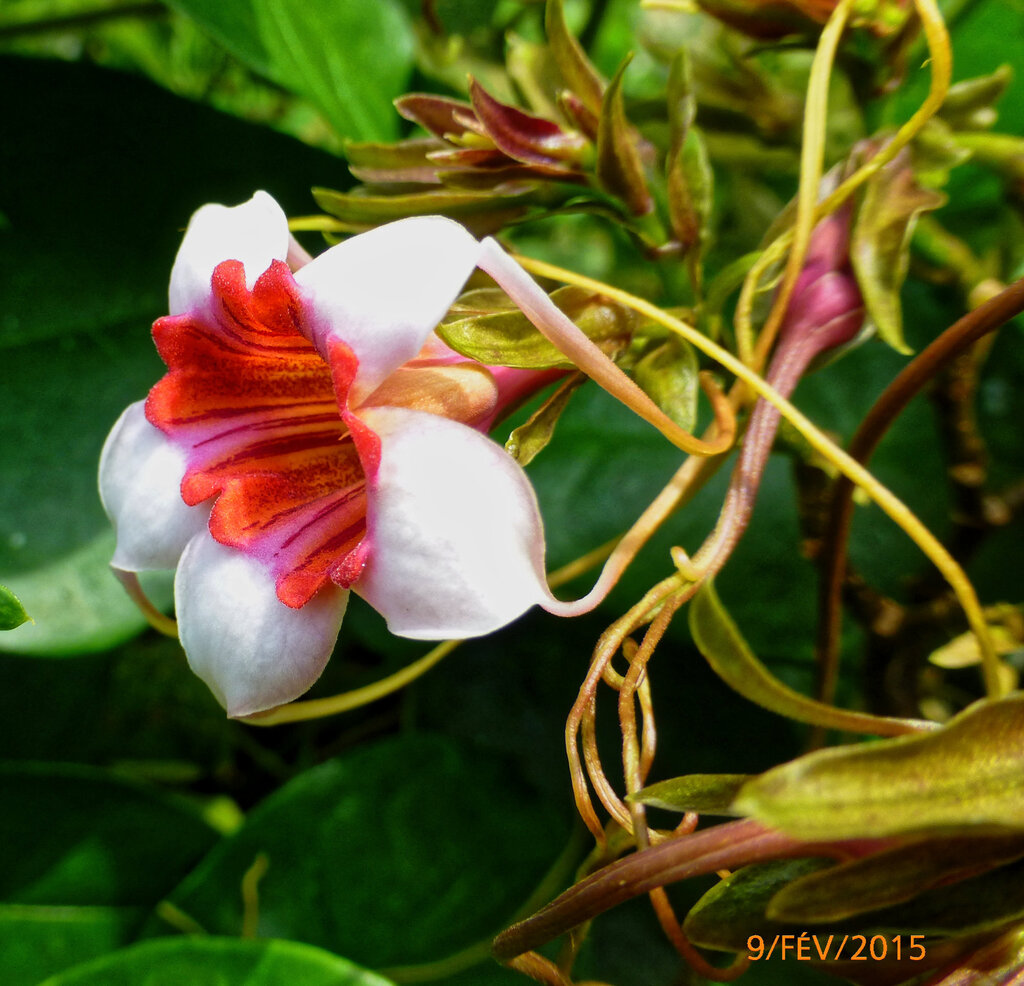
Strophanthus preussii
- Origin
- Africa
- Part used
- See detailed notebook
- Tradition
- Traditional ethnobotany
A climbing vine with strange flowers adorned with long twisted filaments, Strophanthus preussii grows in the forests and savannas of Central and West Africa. Its seeds, both feared and respected, were used for a long time by certain peoples to make arrow poison, before Western pharmacopoeia took an interest in their cardiotonic properties. A plant that belongs more to the history of poisons and remedies than to everyday domestic use.
Traditional uses
Hunting and arrow poison
The crushed seeds of Strophanthus preussii were traditionally used by various Central African peoples to prepare arrow poison for hunting.
Traditional heart tonic
In certain traditional African pharmacopoeias, the seeds were used in tiny, closely watched doses as a heart stimulant, a use that later inspired pharmacological research into cardiotonic glycosides.
Empirical remedy for livestock
Some rural communities report an occasional use of seed-based preparations for livestock ailments, in an empirical, non-standardized setting.
Source of pharmaceutical research
The plant was studied by European botanists and pharmacologists of the 19th and 20th centuries due to its kinship with Strophanthus gratus, the historical source of ouabain.
Before you use it
A highly toxic plant: the seeds contain powerful cardiotonic glycosides that can cause serious, even fatal, heart trouble, even at low doses. Never use in self-medication; any preparation based on this plant is strictly for use under the supervision of a qualified healthcare professional. Contraindicated in pregnancy, breastfeeding, children, and in those with pre-existing heart conditions or undergoing medication (risk of interaction with heart treatments). The seeds and sap must be handled with the greatest caution, avoiding any contact with mucous membranes or open wounds.
The detailed notebook
- Prepared as a paste or decoction
- Traditional duration of use
- Known contraindications
- Related species and their uses
Where to find it
Partner herbalists — available with the detailed notebook.
Sources
PFAF