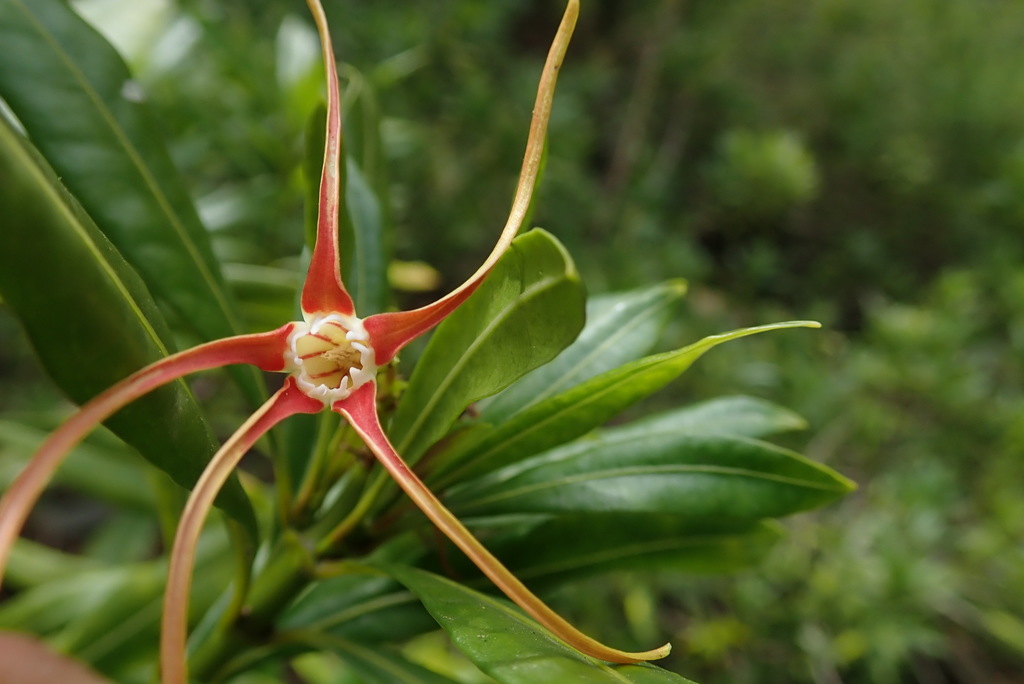
Strophanthus speciosus
- Origin
- Africa
- Part used
- See detailed notebook
- Tradition
- Traditional ethnobotany
In the wooded savannas and forest edges of southern Africa, Strophanthus speciosus has long been recognized by traditional healers as a plant to be handled with particular respect. Its seeds, rich in powerful active compounds, are part of the long history of strophanthus species once used to prepare arrow poison and traditional cardiotonic remedies. This entry retraces, for historical purposes, the uses attributed to it.
Traditional uses
Support for a weakened heart
Strophanthus speciosus seeds, like those of other species in the genus, were traditionally associated with a cardiotonic use in certain African pharmacopoeias, linked to their cardiac glycoside content.
Traditional arrow poison
Healers and hunters in several regions of southern Africa historically used the crushed seeds of this plant to coat arrow tips, exploiting their powerful toxicity on the game's heart muscle.
Occasional external applications
In certain local traditions, highly diluted preparations based on bark or root are said to have been used externally, though these practices remain poorly documented and vary by region.
Old veterinary use
Some ethnobotanical sources report a traditional, very measured use in the empirical treatment of certain livestock ailments, though this was never a widespread or recommended practice.
Before you use it
A highly toxic plant: the seeds contain powerful cardiotonic glycosides (close to ouabain) that can cause cardiac arrest if ingested or improperly absorbed. Never use in self-medication or as a home preparation: any use requires supervision by a qualified healthcare professional. Contraindicated in pregnancy, breastfeeding, children, and in those with pre-existing heart conditions or undergoing treatment with digitalis or other cardiotonics. High risk of drug interactions, particularly with any treatment affecting heart rhythm or function; keep out of reach of children and animals.
The detailed notebook
- Prepared as a paste or decoction
- Traditional duration of use
- Known contraindications
- Related species and their uses
Where to find it
Partner herbalists — available with the detailed notebook.
Sources
PFAF