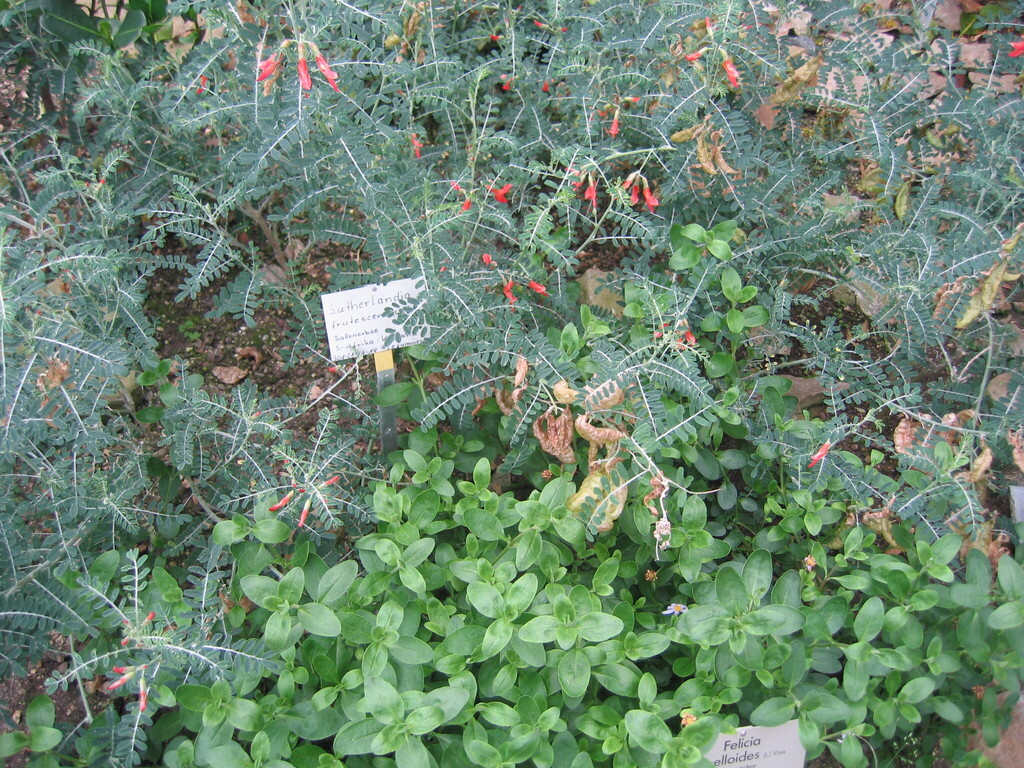
Sutherlandia
- Origin
- Africa
- Part used
- See detailed notebook
- Tradition
- Traditional ethnobotany
A shrub of southern Africa with orange-red flowers and swollen pods, Sutherlandia, also called the "cancer bush" by settlers or "insiswa" among the Xhosa, has for centuries held a special place in Khoisan, Xhosa, and Zulu traditional pharmacopoeia. Reputed as a strengthening tonic against exhaustion and the ailments of age, it was also used during major epidemics and difficult convalescence.
Traditional uses
Support during exhaustion
Traditionally consumed as a bitter tonic thought to restore strength and appetite to those weakened, convalescing, or elderly.
Accompanying feverish states
Long used in South African communities during fevers, colds, and flu-like illness, as a bitter decoction or infusion.
Bitter digestive support
Used to stimulate appetite and ease mild digestive troubles, following the classic use of bitter plants.
Soothing external use
A leaf decoction was applied as a wash or compress on wounds and skin irritation in certain local traditions.
Before you use it
Not recommended during pregnancy and breastfeeding, in the absence of sufficient safety data. Use is discouraged in children and in those undergoing immunosuppressant treatment, due to possible effects on the immune system. Possible interactions with certain medications (including HIV and diabetes treatments) reported in the literature; the advice of a healthcare professional is essential before any use. Prolonged or high-dose use is not documented as safe; it is recommended to stick to short, supervised courses.
The detailed notebook
- Prepared as a paste or decoction
- Traditional duration of use
- Known contraindications
- Related species and their uses
Where to find it
Partner herbalists — available with the detailed notebook.
Sources
PFAF