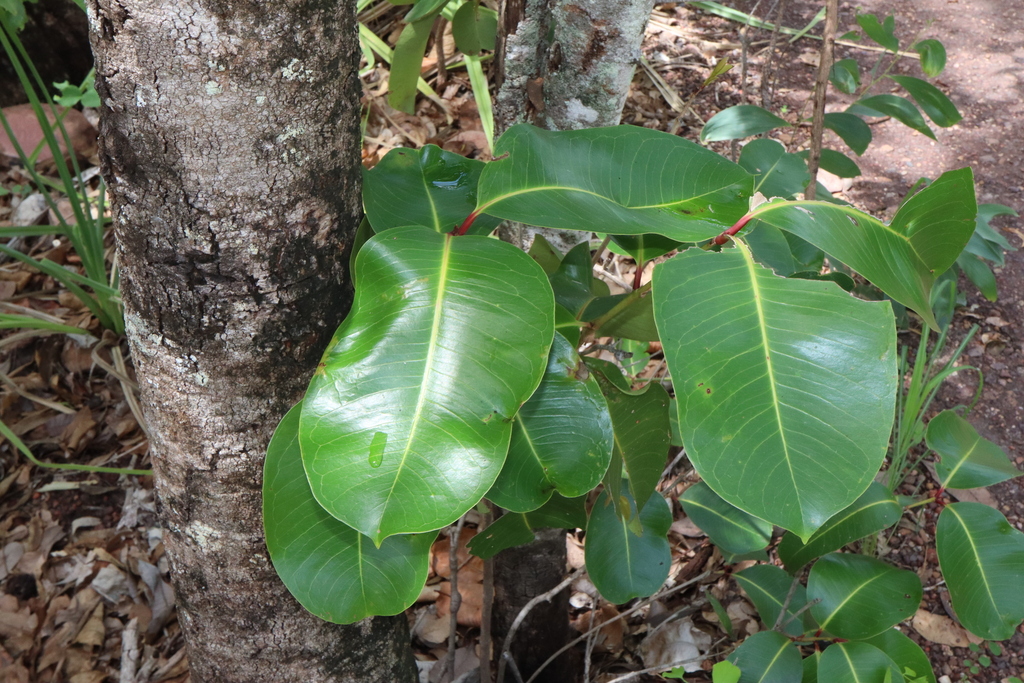
Syzygium suborbiculare
- Origin
- Oceania
- Part used
- See detailed notebook
- Tradition
- Traditional ethnobotany
Beneath the canopy of northern Australia, Syzygium suborbiculare, sometimes called the "bush apricot plum" by Aboriginal peoples, has for generations been known as both a nourishing and a healing tree. Australia's First Nations peoples used its aromatic leaves in fumigation and infusion to ease bodily ailments, in an oral tradition passed down through generations. Today this botanical knowledge of the Australian bush still draws the interest of ethnobotanists.
Traditional uses
Traditional care for common ailments
The leaves were traditionally used by Aboriginal Australians to support the body during colds and mild feverish states.
Fumigation to clear the respiratory tract
Smoke from burning fresh leaves was traditionally inhaled to relieve coughing and congestion, a widespread practice among several Aboriginal communities of northern Australia.
Soothing external use
As a decoction, the leaves were sometimes used as an external wash to soothe minor skin irritation, according to uses passed down orally in the bush.
Nourishing fruit and light digestive support
The fleshy fruit of the tree, eaten fresh, was also valued as a traditional food accompanying meals, contributing to both nutrition and digestive wellbeing.
Before you use it
The traditional uses of this plant remain poorly documented scientifically; caution is warranted regarding their application. Avoid self-medication, particularly for fumigation, and consult a healthcare professional before any use. Not recommended for pregnant or breastfeeding women, for lack of sufficient safety data. Do not use in young children without the advice of a qualified professional.
The detailed notebook
- Prepared as a paste or decoction
- Traditional duration of use
- Known contraindications
- Related species and their uses
Where to find it
Partner herbalists — available with the detailed notebook.
Sources
PFAF, PubMed, Wikipedia