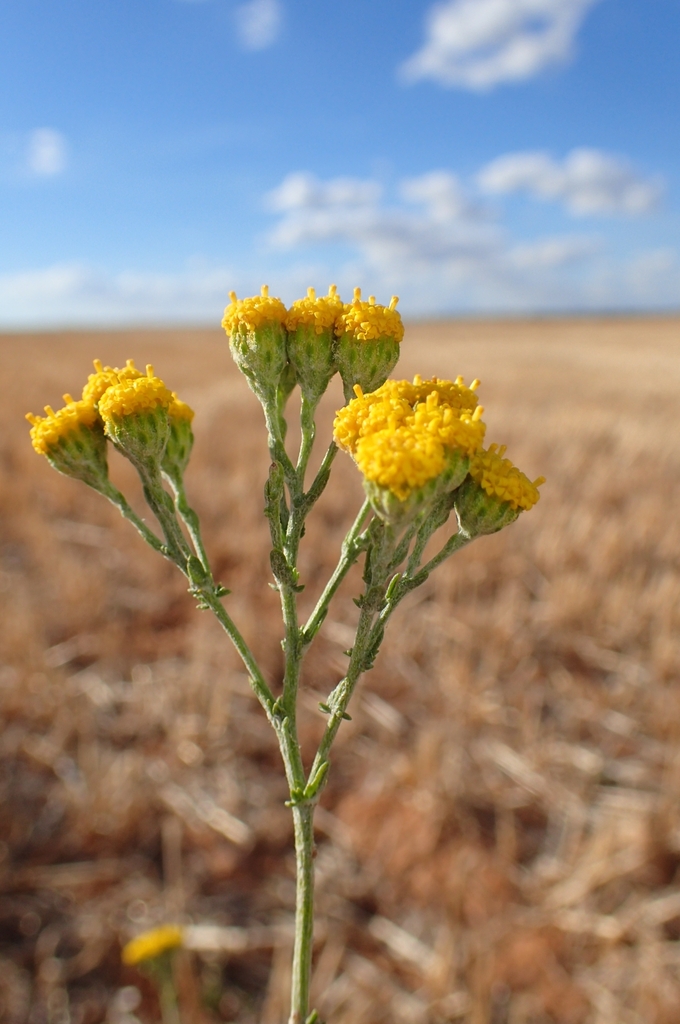
Tanacetum microphyllum
- Origin
- Europe
- Part used
- See detailed notebook
- Tradition
- Traditional ethnobotany
An unassuming cousin of common tansy, Tanacetum microphyllum has long grown in the shadow of Mediterranean herbals, reserved for knowledgeable hands. The old herbalists of the Iberian peninsula credited it with soothing properties for pain and bodily heat, passed down from generation to generation rather than set down in the great treatises.
Traditional uses
Traditional relief for joint pain
The plant was applied locally, as a poultice or infused oil, to soothe aching joints and muscle tension.
Use for skin inflammation
The aerial parts were traditionally used as a compress to calm redness and skin flare-ups.
Care for minor local irritation
Some folk practices report its external use to soothe bites and superficial irritation.
Reported occasional digestive use
In some regions, a mild infusion was sometimes taken to help with difficult digestion, in the manner of other tansies.
Before you use it
A member of the daisy family, to be avoided in case of known allergy to plants of this family (arnica, chamomile, yarrow...). Strictly discouraged during pregnancy and breastfeeding because of potentially uterus-stimulating effects, like other tansies. Internal use is not recommended without the advice of a health professional, as the plant is poorly documented and may contain irritant or toxic compounds at high doses. Keep out of reach of children; do not use on damaged skin without a practitioner's advice.
The detailed notebook
- Prepared as a paste or decoction
- Traditional duration of use
- Known contraindications
- Related species and their uses
Where to find it
Partner herbalists — available with the detailed notebook.
Sources
PFAF, Wikipedia