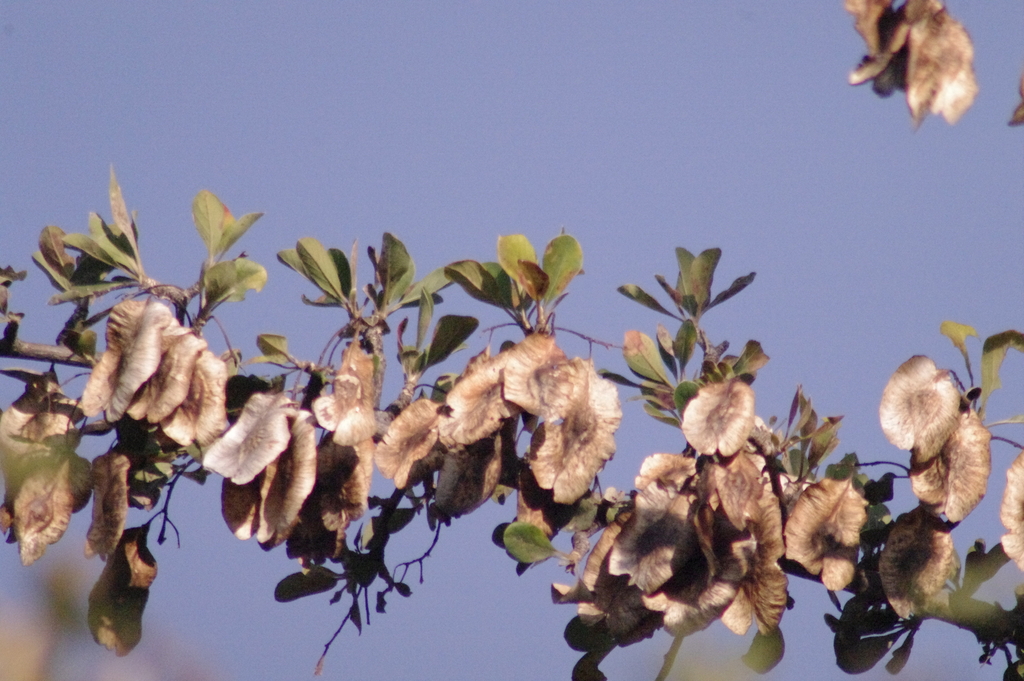
Terminalia prunioides
- Origin
- Africa
- Part used
- See detailed notebook
- Tradition
- Traditional ethnobotany
A discreet shrub of the southern savannas, Terminalia prunioides, often called the "purple-pod terminalia," has long been known to traditional healers of southern Africa. Its bark and roots are among the plant remedies commonly invoked in local pharmacopoeias to support the body's vitality. Its reputation, however, remains mainly oral, passed down through generations rather than recorded in learned texts.
Traditional uses
Easing intestinal troubles
The bark was traditionally prepared as a decoction to accompany episodes of diarrhea or digestive discomfort, according to uses noted in several communities of southern Africa.
Care for wounds and skin conditions
Preparations of crushed bark or decoction were applied externally to wounds, injuries, and certain skin irritation.
Support during coughs and colds
Roots and bark went into traditional remedies meant to relieve coughing and respiratory conditions.
Traditional use against fever
Some communities report the use of bark decoctions to accompany feverish states and generalized pain.
Before you use it
Traditional use is poorly documented scientifically: caution requires consulting a healthcare professional before any internal use. Avoid any use in pregnant or breastfeeding women, for lack of sufficient safety data. Do not give to young children without medical advice, due to a lack of studies on safe dosing. Concentrated bark or root preparations may present toxicity if poorly dosed or used over a long period.
The detailed notebook
- Prepared as a paste or decoction
- Traditional duration of use
- Known contraindications
- Related species and their uses
Where to find it
Partner herbalists — available with the detailed notebook.
Sources
PFAF, Wikipedia