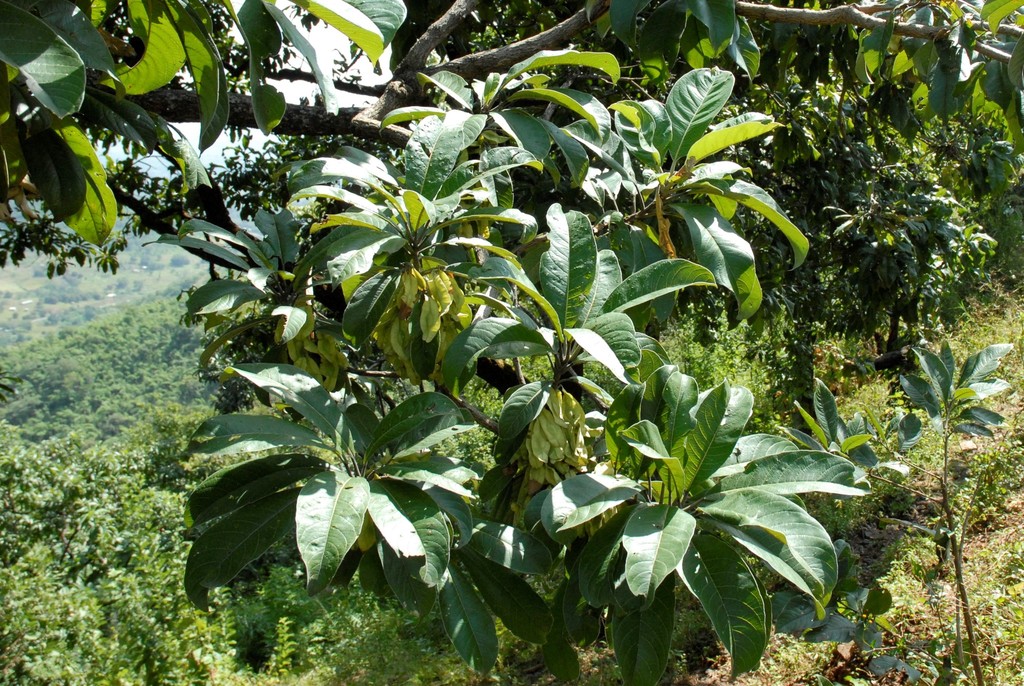
Terminalia schimperiana
- Origin
- Africa
- Part used
- See detailed notebook
- Tradition
- Traditional ethnobotany
Beneath the wooded savannas of Sudano-Sahelian Africa, Terminalia schimperiana — sometimes called the local herbalists' "incense tree" — has long featured in West African traditional pharmacopoeias. Its bark and leaves, gathered with care, have fed folk uses passed down through generations within rural communities.
Traditional uses
Traditional support for digestive troubles
The bark was traditionally prepared as a decoction to accompany intestinal discomfort and temporary digestive disorders, according to uses noted in several West African regions.
Traditional care for skin wounds
Used externally, crushed leaves or bark were used to make compresses applied to wounds and minor skin lesions.
Traditional use against fevers
Bark decoctions are among the folk remedies used to accompany feverish episodes in traditional African medicine.
Traditional respiratory use
Some oral traditions report the use of bark-based preparations to relieve coughs and mild respiratory conditions.
Before you use it
Traditional use is poorly documented by modern research: caution is warranted, particularly regarding the bark's tannin content. Discouraged in pregnant or breastfeeding women, for lack of sufficient safety data. Do not give to young children without the advice of a healthcare professional. If undergoing medication treatment, seek professional advice before any use, due to potential unstudied interactions.
The detailed notebook
- Prepared as a paste or decoction
- Traditional duration of use
- Known contraindications
- Related species and their uses
Where to find it
Partner herbalists — available with the detailed notebook.
Sources
PFAF