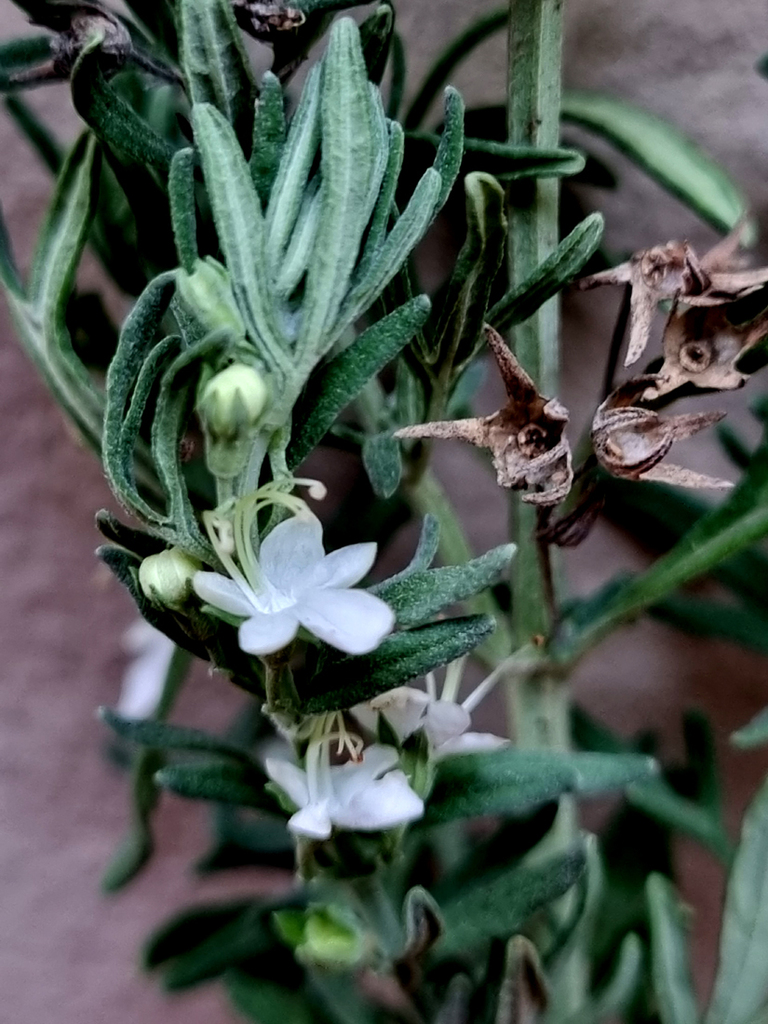
Teucrium africanum
- Origin
- Africa
- Part used
- See detailed notebook
- Tradition
- Traditional ethnobotany
Teucrium africanum, southern Africa's germander, belongs to the large germander family, several cousin species of which have shaped Mediterranean and African pharmacopoeia. Traditional healers of southern Africa knew it as "wilde als" and readily used it in the home. Its characteristic bitterness made it a sensible remedy for everyday common ailments.
Traditional uses
Support for difficult digestion
The plant was traditionally infused to accompany slow digestion and post-meal discomfort, in line with bitter germanders used as digestive tonics.
Traditional fever remedy
In southern Africa, a leaf decoction was used to bring down fever and accompany flu-like illness, according to the oral tradition of local herbalists.
Skin washes and compresses
Crushed or infused leaves were used as an external wash to soothe minor skin irritation and superficial wounds.
Soothing for the respiratory tract
An infusion of the aerial parts was sometimes drunk to relieve coughs and mild bronchial conditions, in a use similar to other germanders.
Before you use it
The genus Teucrium is known for potential liver toxicity with prolonged use or high doses; medical advice is essential before any internal use. Internal use is discouraged in pregnant or breastfeeding women, as well as children, for lack of sufficient safety data. Do not extend the course beyond a few days without the advice of a healthcare professional, due to liver-damage risks reported for other germanders. Avoid any self-medication if undergoing medication treatment, particularly liver-toxic treatment, without consulting a professional.
The detailed notebook
- Prepared as a paste or decoction
- Traditional duration of use
- Known contraindications
- Related species and their uses
Where to find it
Partner herbalists — available with the detailed notebook.
Sources
PFAF