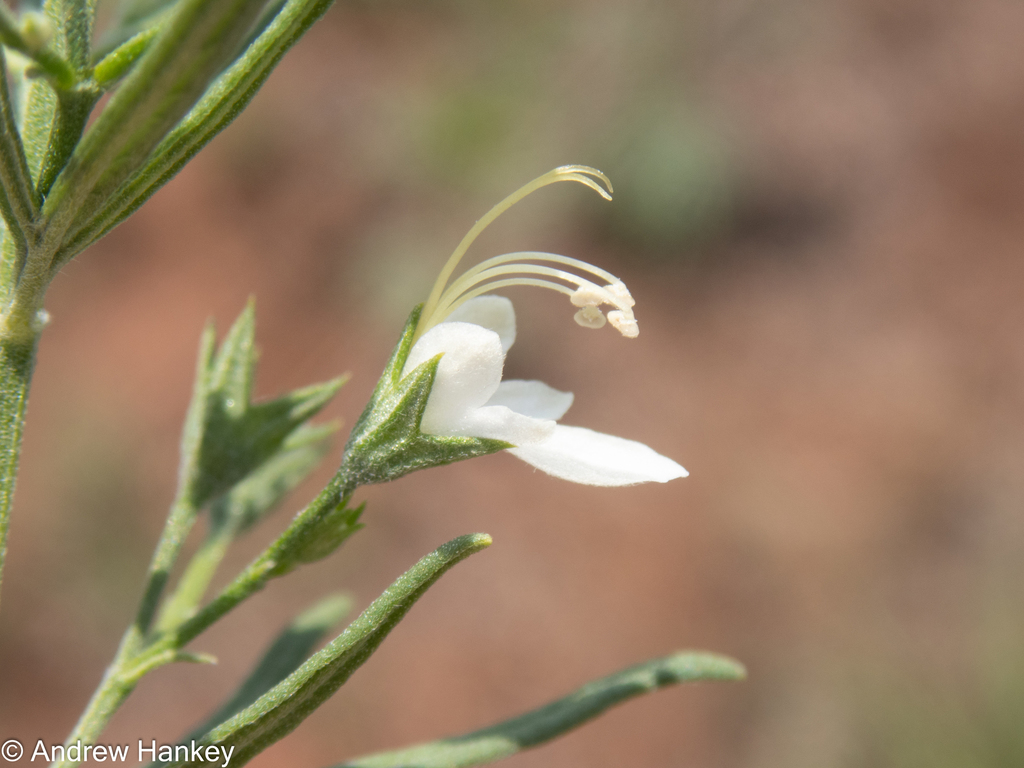
Teucrium trifidum
- Origin
- Africa
- Part used
- See detailed notebook
- Tradition
- Traditional ethnobotany
The genus Teucrium, rich in numerous species spread from the Mediterranean basin to southern Africa, has always accompanied the knowledge of traditional herbalists. Teucrium trifidum, an African germander, belongs to this lineage of bitter plants used in local pharmacopoeias, though its documentation remains more modest than that of its European cousins. The uses reported for it come mainly from oral tradition and regional ethnobotany.
Traditional uses
Traditional digestive support
Like other germanders, the plant was traditionally used as a bitter infusion to accompany slow digestion or post-meal discomfort.
Traditional fever-reducing use
In certain African traditions, the aerial parts were used as a decoction to accompany feverish states, in the manner of other locally used Teucrium species.
External application on the skin
Uses as a wash or compress are reported for minor skin irritation, in a logic of traditional external use rather than demonstrated treatment.
Old dewormer use
Some ethnobotanical sources mention a traditional use as a dewormer, a use to be approached with the greatest caution for lack of precise dosing data.
Before you use it
The genus Teucrium is known to contain compounds that can present liver toxicity with prolonged use or high doses; caution is warranted. Use is undocumented in pregnant or breastfeeding women, and should be avoided as a precaution. Do not use in children without the advice of a qualified healthcare professional. In the absence of precise data on safe dosing and duration of use, the advice of a herbalist or doctor is strongly recommended before any use.
The detailed notebook
- Prepared as a paste or decoction
- Traditional duration of use
- Known contraindications
- Related species and their uses
Where to find it
Partner herbalists — available with the detailed notebook.
Sources
PFAF