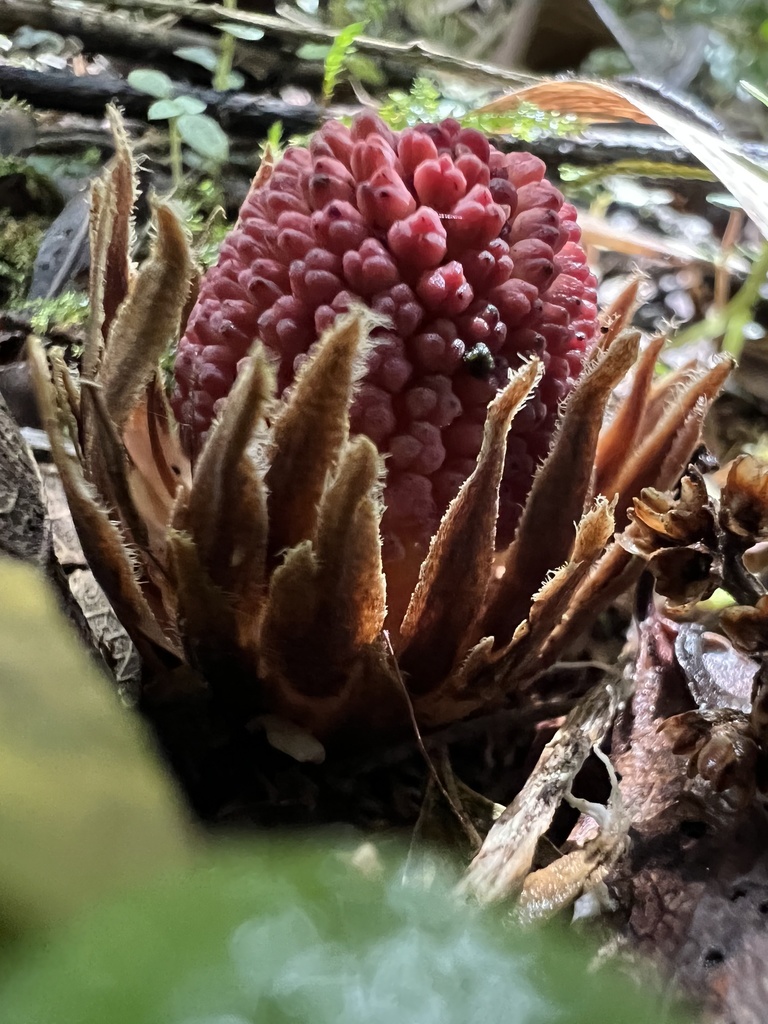
Thonningia
- Origin
- Africa
- Part used
- See detailed notebook
- Tradition
- Traditional ethnobotany
A chlorophyll-free parasitic plant, Thonningia (Thonningia sanguinea) grows hidden at the foot of trees and shrubs in the forests and savannas of West and Central Africa. Its fleshy, dark red inflorescences have long drawn the attention of traditional herbalists for various uses, passed down orally through generations.
Traditional uses
Traditional digestive support
The root and flowers are traditionally used as a decoction to accompany digestive troubles and stomach ache, according to uses reported in West Africa.
Use against diffuse pain
Certain folk traditions credit Thonningia with soothing properties used as a local application or decoction against various bodily pains.
Traditional postpartum use
The plant is mentioned in certain traditional women's practices, particularly around the postnatal period, though these uses remain poorly documented scientifically.
Traditional wound care
Preparations of crushed root or decoction have traditionally been used to wash or clean certain wounds and skin conditions.
Before you use it
Traditional use is poorly documented by modern research: caution is warranted, particularly regarding doses and duration of use. Discouraged in pregnant or breastfeeding women in the absence of sufficient safety data. Do not use in children without the advice of a healthcare professional. Consult a healthcare professional or experienced herbalist before any use, particularly if undergoing medication treatment.
The detailed notebook
- Prepared as a paste or decoction
- Traditional duration of use
- Known contraindications
- Related species and their uses
Where to find it
Partner herbalists — available with the detailed notebook.
Sources
Wikipedia