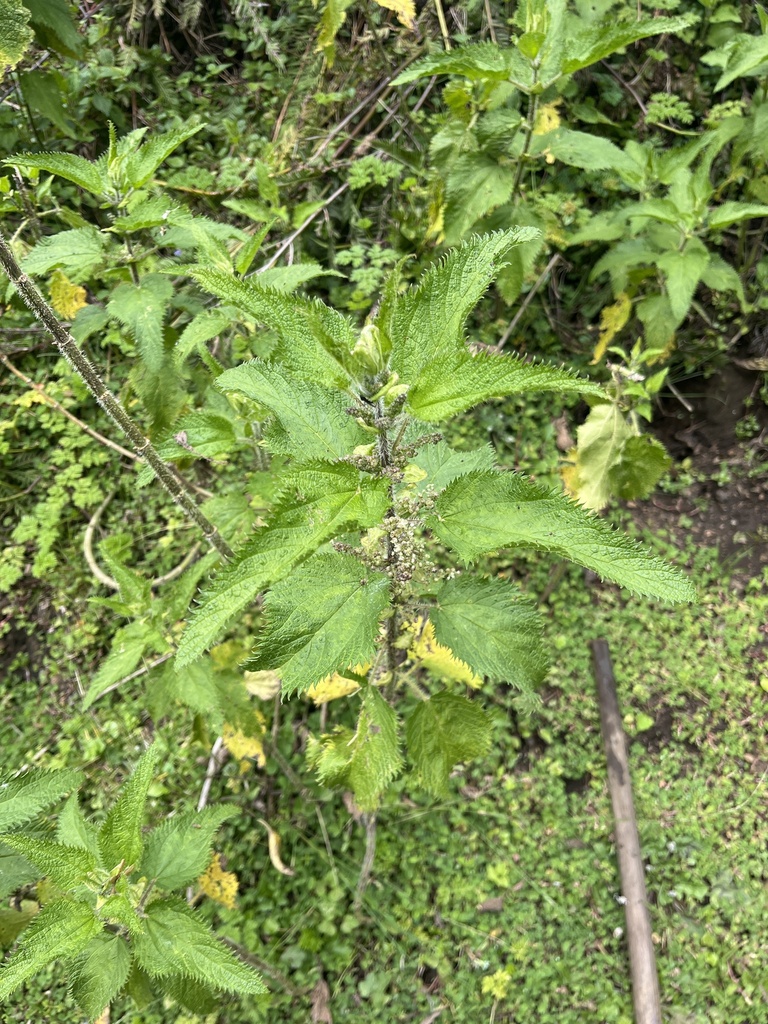
Urtica massaica
- Origin
- Africa
- Part used
- See detailed notebook
- Tradition
- Traditional ethnobotany
The African cousin of our European nettles, Urtica massaica grows in the mountainous regions of East Africa, particularly Kenya and Tanzania, where local communities have long known it. The elders of the East African highlands regarded it both as a famine food and an everyday remedy, in the manner of nettles used elsewhere in the world.
Traditional uses
Joint pain and stiffness
Fresh or dried leaves were traditionally used externally, sometimes by direct friction, to accompany joint and muscle pain, according to the practices of local healers.
Traditional digestive support
A leaf infusion was drunk to accompany difficult digestion or mild gastrointestinal troubles, according to uses reported in East African rural communities.
A nourishing, fortifying leaf
Like other nettles, the cooked young shoots were eaten as a traditional green vegetable, considered fortifying, particularly during convalescence or famine periods.
Traditional postnatal use
In certain local practices, nettle was used as a decoction to accompany the postpartum period, a reported but poorly documented use in the available scientific literature.
Before you use it
Contact with the fresh plant causes a characteristic stinging reaction; wearing gloves is recommended when harvesting. Use is discouraged without the advice of a healthcare professional during pregnancy and breastfeeding, due to a lack of data and traditional uses suggesting an action on the female sphere. As the plant is little studied by modern research, caution is warranted regarding quantities and frequency of use, particularly with prolonged internal use. If undergoing medication treatment (particularly diuretics, anticoagulants, or blood-pressure medication), seek professional advice before any regular use.
The detailed notebook
- Prepared as a paste or decoction
- Traditional duration of use
- Known contraindications
- Related species and their uses
Where to find it
Partner herbalists — available with the detailed notebook.
Sources
PFAF