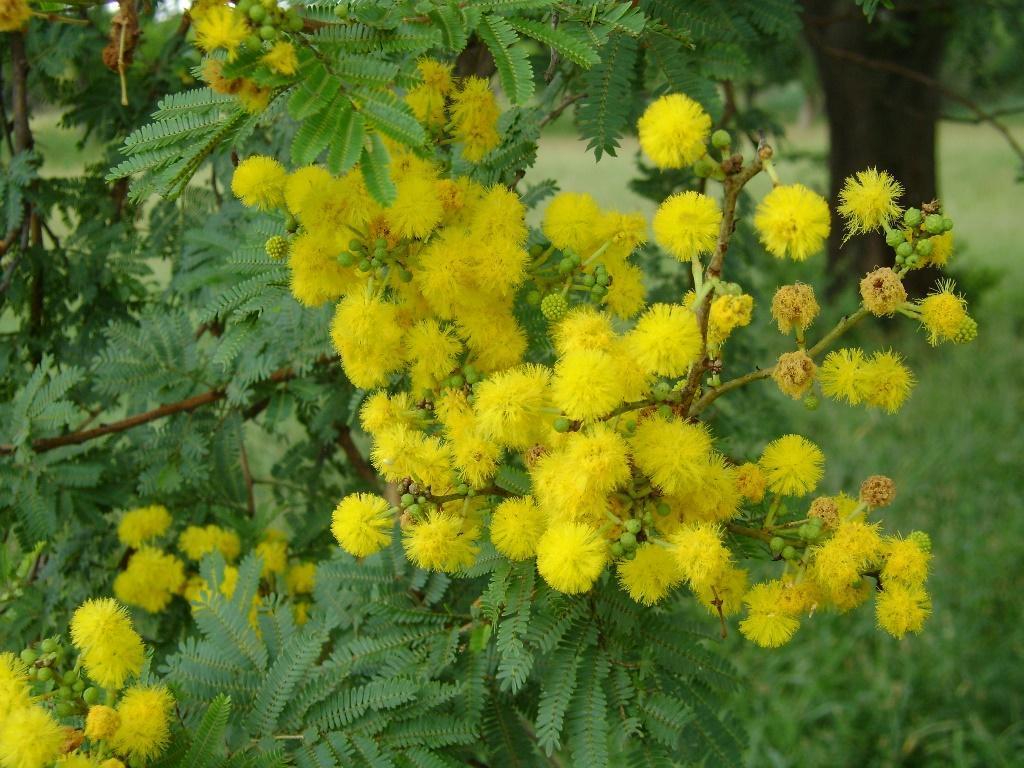
Vachellia karroo
- Origin
- Africa
- Part used
- See detailed notebook
- Tradition
- Traditional ethnobotany
Beneath the vast skies of southern Africa, the thorny Vachellia karroo — known to the elders as Acacia karroo — has long accompanied the life of savanna peoples. Its bark, pods, and roots were among the plant resources put to use when Western pharmacopoeia was still far away. It was credited with soothing virtues for stomach ailments, passed down through generations around the fire.
Traditional uses
Easing intestinal troubles
A decoction of root or pods was traditionally drunk to calm diarrhea and stomach ache, according to uses reported among several southern African peoples.
Remedy against intestinal worms
Certain communities used a preparation based on seeds or root as a traditional dewormer, in an occasional purging logic.
Care for wounds and irritation
The tannin-rich bark and resin were sometimes applied externally to disinfect minor wounds or soothe skin irritation.
Soothing the throat
The resinous gum exuded by the tree was traditionally chewed or dissolved to soothe throat irritation, in the manner of other African acacia gums.
Before you use it
The high tannin content of the roots and bark can irritate the digestive system if preparations are too concentrated or prolonged. Traditional dewormer use should never replace appropriate treatment, particularly in children, pregnant, or breastfeeding women. Modern scientific data on the composition and safety of this species remain limited; caution is warranted in the absence of advice from a healthcare professional. Avoid any prolonged self-medication; reserve these uses for occasional, traditional settings under the supervision of a knowledgeable practitioner.
The detailed notebook
- Prepared as a paste or decoction
- Traditional duration of use
- Known contraindications
- Related species and their uses
Where to find it
Partner herbalists — available with the detailed notebook.
Sources
Wikipedia