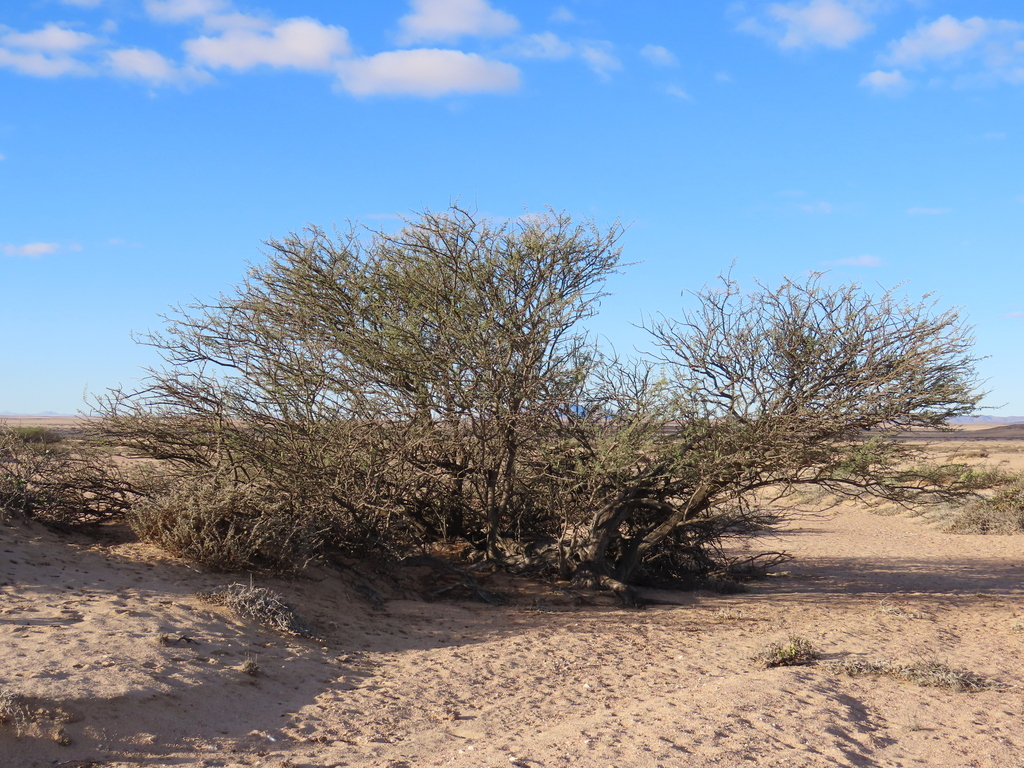
Vachellia reficiens
- Origin
- Africa
- Part used
- See detailed notebook
- Tradition
- Traditional ethnobotany
Among the thorny plants of the dry savannas of East and southern Africa, Vachellia reficiens (once classed among the Acacias) holds a discreet but old place in pastoral and vernacular uses. Communities living within its range have long observed and used its pods and seeds, notably as a livestock food resource and, more rarely, in local preparations. As documented sources remain limited, this entry reflects traditional uses reported with caution.
Traditional uses
Traditional forage for herds
Fallen pods and seeds were traditionally gathered to feed goats and livestock during the dry season, when green forage is scarce.
Occasional local use of the seeds
In certain communities, the seeds are said to have been used occasionally in local preparations, though this use is not widely documented or standardized.
Resource associated with the whole tree
As with other Vachellia species of arid zones, the whole tree (wood, gum, thorns) served various local utilitarian purposes, the seeds being only a secondary part of this traditional use.
Before you use it
The seeds of several Vachellia/Acacia species may contain compounds (tannins, variable amounts of alkaloids) poorly characterized for this specific species; human consumption is not recommended without the advice of a qualified professional. No reliable data allows a safe dose to be established for human internal use: avoid in self-medication. Use is discouraged in pregnant or breastfeeding women, as well as children, for lack of safety data. Do not confuse with other Acacia/Vachellia species with different chemical profiles; certain botanical identification is essential before handling the seeds.
The detailed notebook
- Prepared as a paste or decoction
- Traditional duration of use
- Known contraindications
- Related species and their uses
Where to find it
Partner herbalists — available with the detailed notebook.
Sources
PFAF, Wikipedia