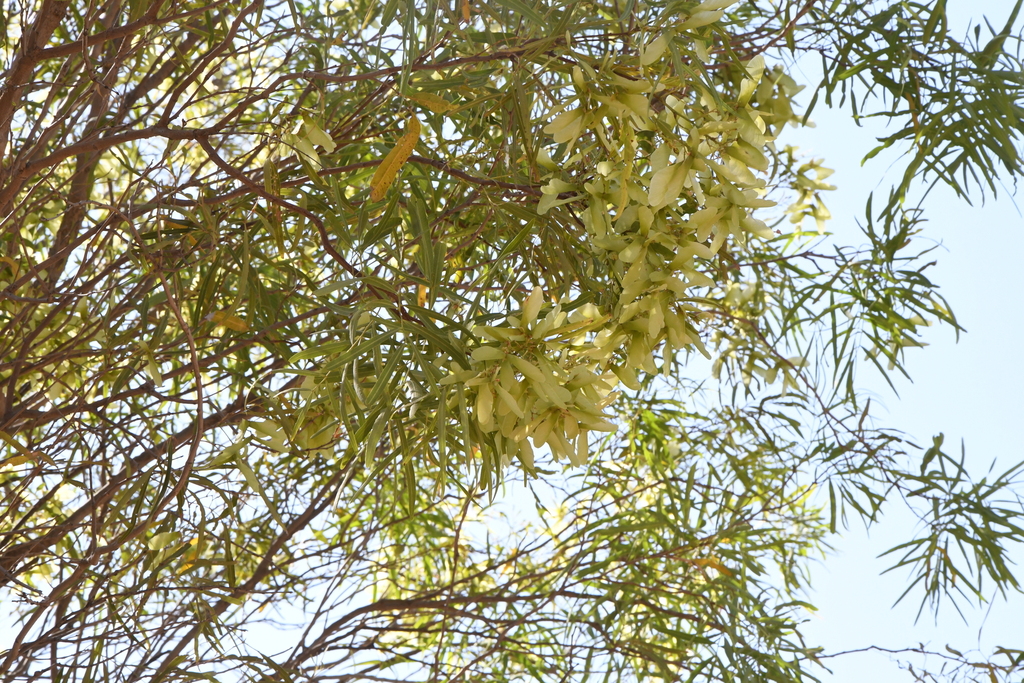
Ventilago viminalis
- Origin
- Oceania
- Part used
- Root
- Tradition
- Traditional ethnobotany
Ventilago viminalis, sometimes called "iron vine" by Australian settlers because of its sturdy vine and dense wood, grows in the arid regions of the continent's interior. Aboriginal peoples have long known its roots, whose bark and yellow-orange sap went into various traditional preparations.
Traditional uses
Traditional care for skin conditions
Root bark, ground to a powder or infused, was traditionally applied to the skin to soothe certain irritations, according to usages reported among Aboriginal peoples of Australia.
Traditional use against pain
The root was sometimes used in external preparations to relieve localized pain, as part of indigenous medicinal practices passed down orally.
Traditional yellow-orange dye
The colored sap extracted from the roots traditionally served as a natural dye, a use reported alongside its medicinal applications among certain Aboriginal groups.
What to know before use
Traditional use is poorly documented in Western scientific literature: caution is warranted for any internal use. Do not use without the advice of a healthcare professional or a recognized expert in traditional Aboriginal practices. Not recommended for pregnant or breastfeeding women, nor for children, due to insufficient data. Reserved for cautious external use; avoid any unsupervised ingestion.
The detailed notebook
- Prepared as a paste or decoction
- Traditional duration of use
- Known contraindications
- Related species and their uses
Where to find it
Partner herbalists — available with the detailed notebook.
Sources
PFAF, Wikipedia