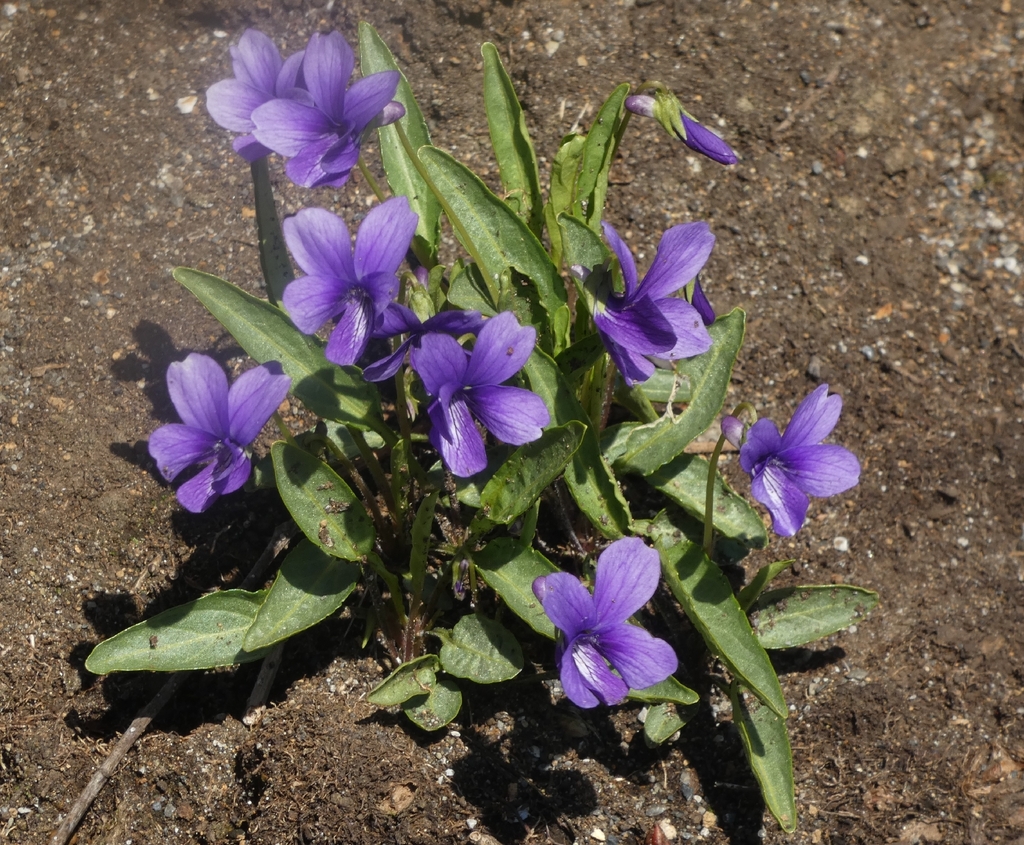
Viola mandshurica
- Origin
- Asia
- Part used
- Leaves
- Tradition
- Traditional ethnobotany
In the countryside of Manchuria and Korea, the small wild violet Viola mandshurica brightens roadside banks from late winter onward. Traditional herbalists of Northeast Asia knew it by the name "je-bi-kkot" and used it for generations to soothe irritated skin and everyday minor ailments. Its traditional use, passed down from mother to daughter, belonged as much to wild cooking as to folk pharmacopeia.
Traditional uses
Soothing irritated skin
Fresh or dried leaves of Viola mandshurica were traditionally applied as a poultice on minor irritations, pimples, and skin redness.
Relieving cough and irritated throat
As an infusion, the leaves were traditionally drunk to soothe mild coughs and throat irritation, particularly during seasonal colds.
Promoting light digestion
The Manchurian violet featured in certain folk preparations intended to help with difficult digestion, often as a mild herbal tea taken after meals.
A spring cleansing plant
Like many wild violets, it was consumed early in the season, raw in salads or as an herbal tea, following a traditional logic of spring "cleansing" of the body.
What to know before use
Avoid prolonged self-medication; this entry is for historical and informational purposes and does not replace medical advice. Not recommended for pregnant or breastfeeding women for lack of sufficient data. Check botanical identification before any harvesting, as certain wild violets can be confused with related species. For skin use, test on a small area of skin before wider application.
The detailed notebook
- Prepared as a paste or decoction
- Traditional duration of use
- Known contraindications
- Related species and their uses
Where to find it
Partner herbalists — available with the detailed notebook.
Sources
PFAF, Wikipedia