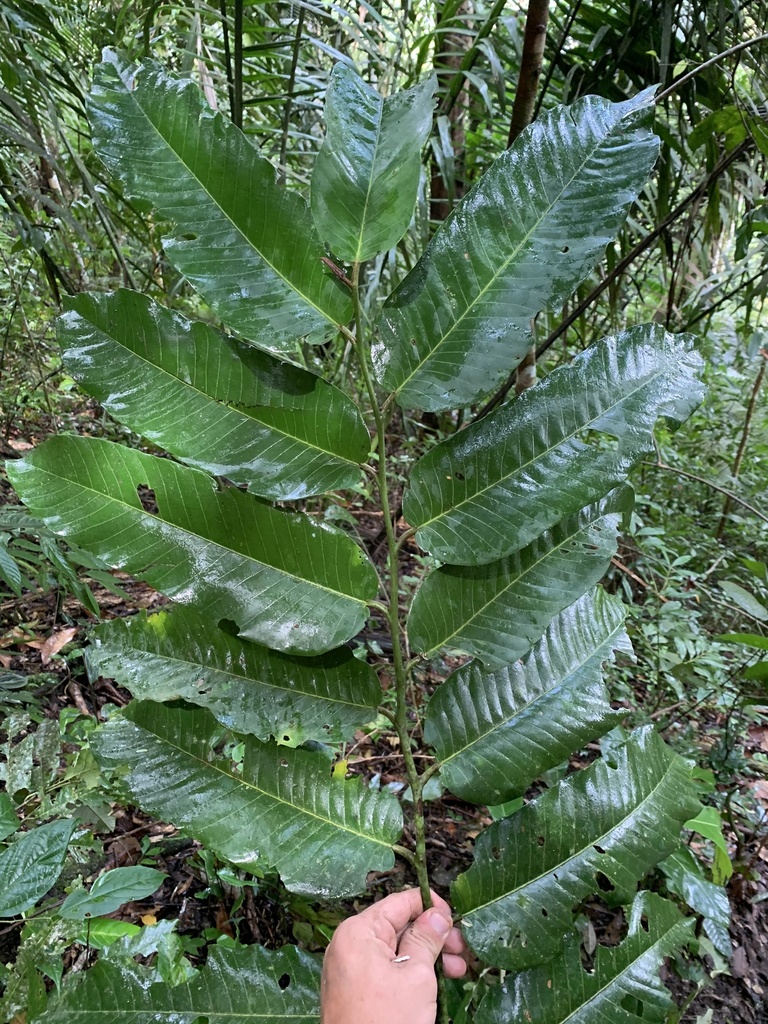
Virola
- Origin
- South America
- Part used
- Bark
- Tradition
- Traditional ethnobotany
In the shadows of the Amazon forests, Virola, a great tree with blood-red sap, holds a special place in the shamanic traditions of several Amazonian peoples. Its bark resin, rich in powerful compounds, has always been reserved for precise ritual and ceremonial uses, passed down through generations by medicine men.
Traditional uses
Preparation of ceremonial powders
Resin drawn from the bark was traditionally used to make powders inhaled during shamanic ceremonies, intended to induce altered states of consciousness for divinatory or therapeutic purposes.
Occasional use against infections
Some Amazonian communities used the resin or bark sap applied locally, crediting it with virtues against certain skin or fungal conditions.
Rites of passage and collective healing
Among several peoples such as the Yanomami, Virola was associated with community healing rituals and initiation rites strictly supervised by the shaman.
Occasional use of the bark as a decoction
More marginally, a light bark decoction is said to have been traditionally used to relieve certain digestive troubles, always under the supervision of a local healer.
What to know before use
Virola contains powerful psychoactive compounds (including tryptamines); its traditional use is exclusively ritual and supervised by experienced shamans, never on one's own. This plant is strongly discouraged outside any supervised traditional framework: the effects can be unpredictable and intense, both psychologically and physiologically. Absolutely to be avoided during pregnancy, breastfeeding, in children, or in cases of medication treatment, particularly antidepressants or MAOIs, owing to risks of serious interactions. In several countries, including France, the use of Virola-based preparations may fall under strict regulation owing to its content of controlled substances.
The detailed notebook
- Prepared as a paste or decoction
- Traditional duration of use
- Known contraindications
- Related species and their uses
Where to find it
Partner herbalists — available with the detailed notebook.
Sources
PFAF, Wikipedia