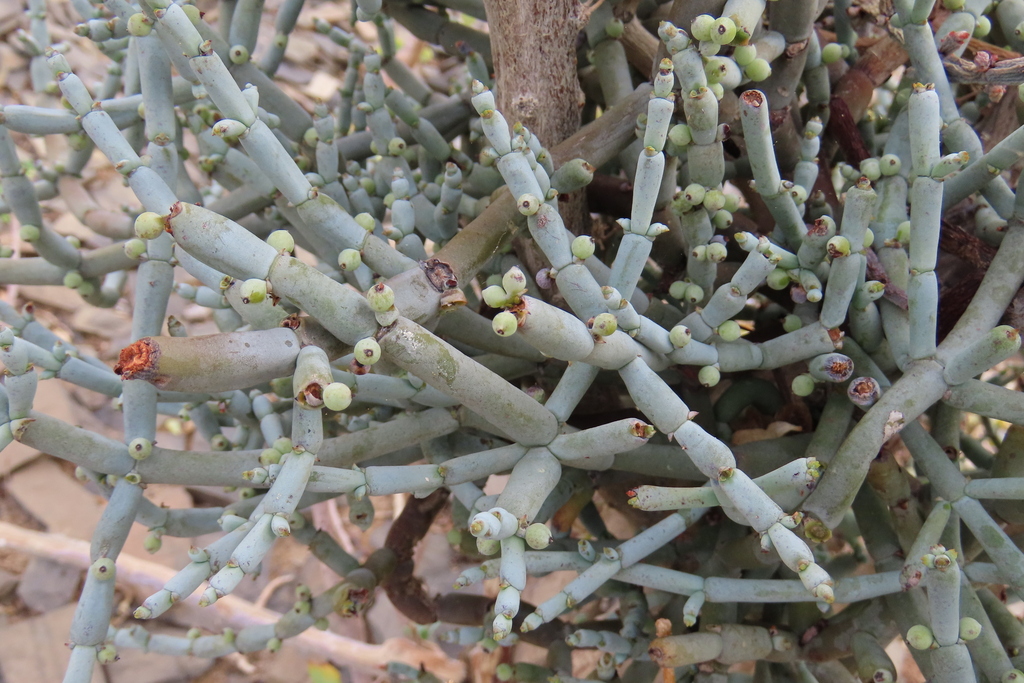
Cape Mistletoe
- Origin
- Africa
- Part used
- See detailed notebook
- Tradition
- Traditional ethnobotany
Cape mistletoe, Viscum capense, clings discreetly to the branches of acacias and other host trees of southern Africa. South African herbalist traditions credited it with soothing virtues for the respiratory tract, in line with uses attributed elsewhere in the world to other mistletoe species. Its parasitic nature and complex composition have always made it a plant handled with particular respect.
Traditional uses
Soothing a stubborn cough
Stems and leaves were traditionally infused to accompany coughing and congestion, in certain folk practices of southern Africa.
Support during bronchial conditions
Cape mistletoe was among the plants used empirically to relieve congested airways.
Traditional use linked to blood pressure
Like other mistletoes, this species has sometimes been associated in folk tradition with a use related to circulation, though without solid documentation.
A plant of folk beliefs
In certain communities, Cape mistletoe was also worn or used symbolically for protection, alongside its internal uses.
Before you use it
A plant to be handled with great caution: mistletoes contain compounds (viscotoxins, lectins) that can be irritating or toxic depending on dose and preparation. Internal use is discouraged without the advice of a healthcare professional trained in plants, particularly in pregnant or breastfeeding women and in children. Do not combine with cardiovascular or blood-pressure treatments without medical advice, due to possible interactions. Avoid any prolonged self-medication; favor a preparation supervised by an experienced herbalist.
The detailed notebook
- Prepared as a paste or decoction
- Traditional duration of use
- Known contraindications
- Related species and their uses
Where to find it
Partner herbalists — available with the detailed notebook.
Sources
PFAF, Wikipedia